When to Start a Fall Garden (While It's Still Summer)
Brian Eden
Your summer garden is winding down. The season isn't.
There's no universal date for starting a fall garden. Start with your average first frost date, then count backward using each crop's days to maturity, adding some extra time because growth slows as the days get shorter. Slow crops like broccoli and cabbage go in first; fast crops like spinach and radishes can be planted much later.
September is a mixed bag. Exciting but also exhausting. You've mulched and fertilized. Pruned, weeded and trellised. Harvests are coming fast now, to the point where you're trying to keep up with the garden as much as you are tending it.
The summer garden is a beautiful thing. But it's also a constant daily battle with an Odyssey's worth of challengers. You've taken on early blight, late blight, and somewhere in between blight. Blossom end rot, fusarium wilt and an impressive and entirely unintentional collection of molds and mildews.
Along with ousting every tiny villain that wants to eat it all before you do. You've fought squash bugs and squirrels. Cabbage worms and spider mites. Hornworms, leaf footed bugs, earwigs, armpit beetles and whatever other insanely motivated enemies mother nature has thrown your way.
It's enough to make you want to finish off the harvest, hang it up till spring and consider some other less adversarial granny hobbies.
Don't.
The best part of the season is about to begin.
If you've been playing this game all season, the fall garden is a cheat code.
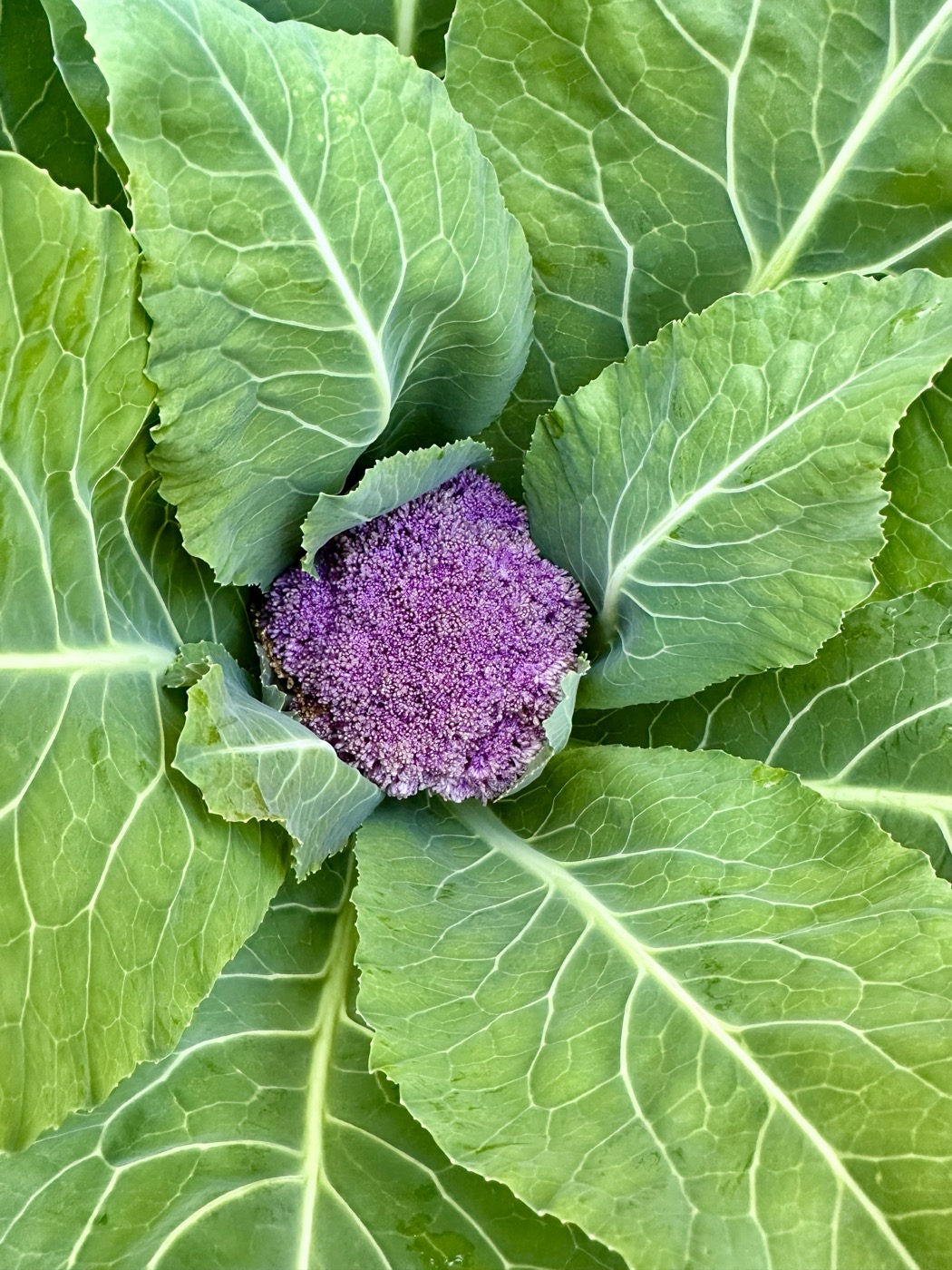
The insects you've spent the summer cursing are easing off. The squirrels are too distracted by entire trees worth of acorns and hickory nuts to care much about your raised bed.
The soil is still warm and ready. The air is going to start cooling. The crops that thrive in fall — kale, broccoli, lettuce, spinach, carrots, beets — are the ones that any remaining fall pests start to leave alone. They don't need babying, and once the heat breaks they mostly look after themselves.
You go from an uphill battle all summer to a downhill straightaway come September.
After a summer of assorted defeats, the fall garden does wonders for the self-esteem.
The only catch is timing it right. You can't wait or you'll miss the window for your garden-shaped victory lap.
Pick yourself up. Dust off the dibber. The fall garden starts now.
Fall begins in summer
It can feel a little ridiculous thinking about growing ingredients that belong in stews in the middle of gazpacho weather. But your fall crops need warm soil to start. Seeds don't read calendars. They just need the ground to be warm enough to wake up, and enough runway after that to grow into something worth eating before the temperatures get too cold and the daylight gets too short.
So you plant into the warmth of late summer, and the plants come of age into the cool of fall. Now, while you're still sweating. While it feels a bit ridiculous to be tucking cabbage seeds into the ground next to a tomato plant the size of a small tree.
When should you start a fall garden?
Everything about fall planting starts with one date: your average first frost.
Think of it as your planning anchor, not necessarily the day the garden shuts down. Many fall crops keep growing right through light frosts — some even sweeten because of them. But once you know roughly when cold weather tends to arrive, you can count backward from there.
So when to start depends on where you live. A gardener in London and a gardener in Louisville are working with completely different runways.
There's no universal date. There's only your date.
What vegetables can you plant for a fall garden?
Unlike your dainty peppers that start to complain as soon as a sweater is even considered, fall veg get better with a nip in the air. The chill changes their chemistry. Makes them sweeter. Kale after a frost is a different, better vegetable than kale in August. Carrots turn into garden candy.
Here's the fall roster — roughly in the order they should go in the ground, slowest-growing first:
| Crop | Days to maturity | Frost tolerance | When to plant |
|---|---|---|---|
| Cabbage | 50–90 | Hardy — takes a hard frost (~20°F) | First |
| Broccoli | 50–70 | Semi-hardy — takes light frost | First |
| Collards | 40–65 | Hardy — takes a hard frost (~20°F) | First |
| Kale | 40–65 | Hardy — sweeter after frost | First |
| Kohlrabi | 50–60 | Semi-hardy — takes light frost | First–mid |
| Carrots | 60–75 | Semi-hardy — sweeten in cold; mulch to hold | Mid |
| Beets | 50–60 | Semi-hardy — survives the high 20s | Mid |
| Turnips | 50–60 | Semi-hardy — takes light frost | Mid |
| Swiss chard | 40–60 | Semi-hardy — takes light frost | Mid |
| Lettuce | 40–60 | Semi-hardy — takes light frost | Mid |
| Snow / snap peas | 60–70 | Semi-hardy — light frost OK, hard freeze ends them | Mid (needs runway) |
| Spinach | 35–45 | Semi-hardy — may overwinter | Mid–late |
| Arugula | 30–40 | Semi-hardy — takes light frost | Mid–late |
| Radishes | 25–60 | Semi-hardy — sow until the ground freezes | Last |
| Garlic | Harvest next July | Hardy — overwinters underground | Late fall |
Days to maturity and frost hardiness adapted from University of Minnesota Extension; ranges vary by variety and region.
Brassicas: Kale, broccoli, cabbage, collards, kohlrabi, bok and pak choi. These take 60–90 days to grow to maturity, so they're the first ones to go in. If you're a little late or in a colder region, you can find transplants at your garden center to get them in before the deadline. But some of these will happily grow well into winter, even after a freeze. Kale in particular is the poster child for cold sweetness and will happily shrug off frosts that flatten everything around it. Also: almost nothing eats it in fall. After a summer of battling white flies, aphids and cabbage loopers, fall brassicas feel like a miracle.
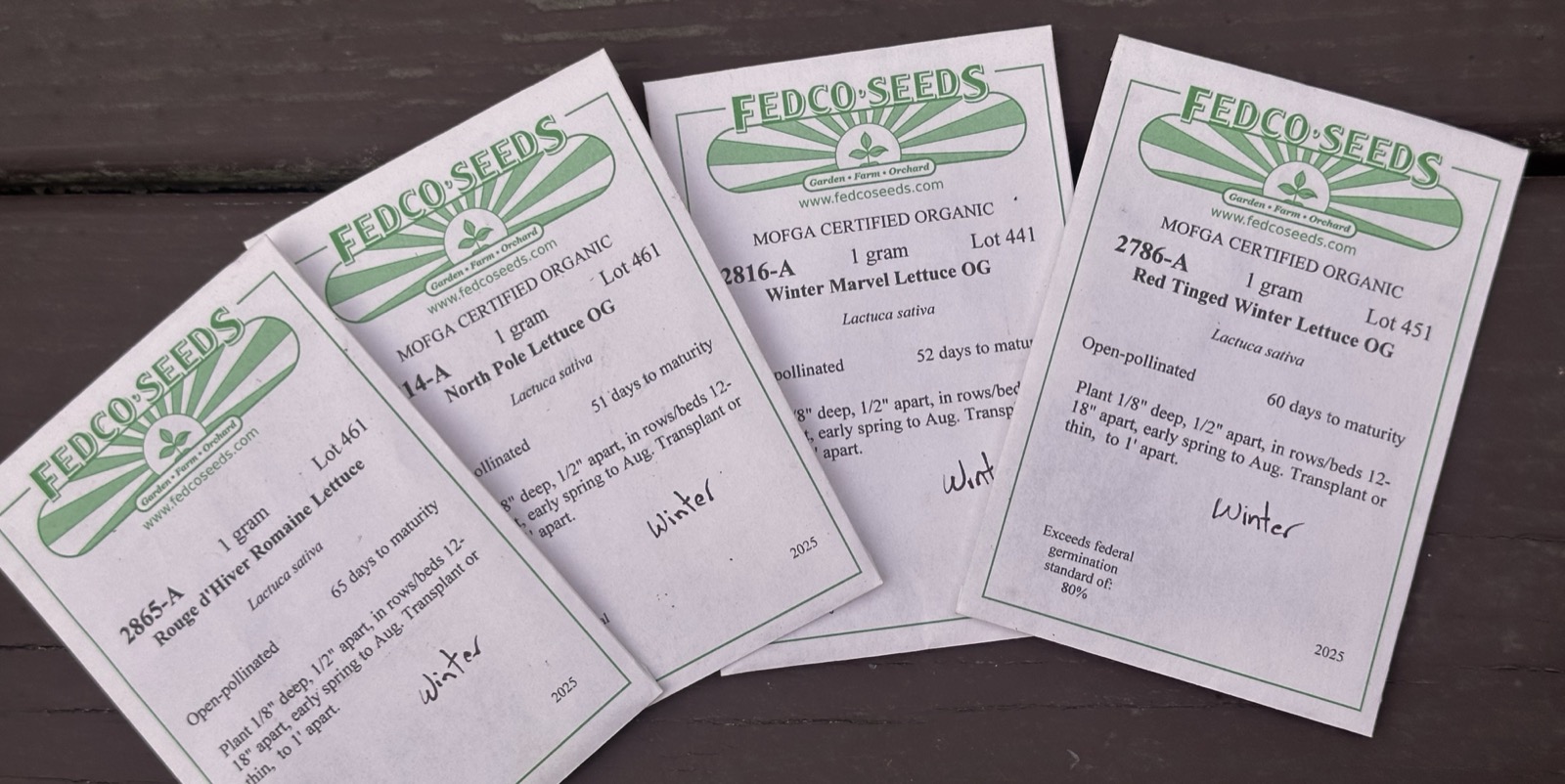
Leafy greens: Lettuce, spinach, arugula, chard, chicory. These grow faster than the brassicas, and are much happier growing in cooler weather. Lettuces that quickly turned bitter and bolted in summer are sweet and crisp in fall. Some varieties (often with unsubtle names like Winter Marvel, Rouge D'hiver, and Arctic King) can even survive a freeze. Spinach is especially resilient. In milder places it'll overwinter and surprise you with an early spring harvest.
Roots: Carrots, beets, radishes, turnips. Radishes are the sprinters of the garden (some grow from seed to harvest in as little as 25 days), which makes them the perfect late-start crop. If you've only got a few weeks left, plant radishes. Carrots and beets sweeten in the cold. The pest pressure that frustrated your summer roots is mostly gone in fall. Late in the season cover them up with leaves or straw mulch for some cold protection. Don't be surprised if some carrot seeds surprise you with a spring crop too.
Peas: Find a few quick-moving packs of snow peas or sugar snaps and you still have time for a quick fall crop. They'll shrug off a light frost, but a hard freeze will finish them — so you just need to make sure the season's long enough to let them flower and produce and fill before the real cold shuts them down.
Garlic: This one is different from everything else on this list. It's a long term investment. A gift to next-summer-you. You plant garlic in late fall, it overwinters in the ground and you'll be pulling out fat heads of garlic to use with your tomato harvest next July. (Or, if you're like me, underwhelmingly small heads from spacing them too close together.)
The season has a story too
The fall garden has a lot of logistics, and it can be tempting to treat it that way. You're counting days, watching the forecast, beating the frost.
But a fall garden is also one of the quieter, better chapters of the year in the garden. The light goes long and gold. The mosquitoes and their obnoxious friends have moved on to wherever all the awful bugs go for their winter holidays. Watering stops being a daily emergency. You're covered in sweaters instead of sweat, pulling sweet carrots out of the ground and it all feels a bit less like a fight and more like your reward for winning.
That's worth writing down. Capture the things you grew. When you put in the seeds and transplants to hit those dates.
But also capture what it was like. Take some photos of this part of your season. The garden with autumn colors. The first frost that finally came, the kale that made it through and the November salad that made you wonder why anyone would ever buy salad from a supermarket.
How Percy can help with your fall garden
Percy is a garden journal and garden planner that knows your growing zone, local frost dates, and the history of your garden. Which means it can turn all of that "it depends" advice into an actual answer for your garden.
Ask Percy when to start any of your fall crops and it'll count back from your frost. It will tell you what still has time to go in the ground, what's better as a transplant now, and what you've probably missed for this year (but can make a note that you want to remember it for next fall). It saves you the trouble of lookup tables, zone maps and trying to figure out backwards math for a dozen different crops, which is a task worse than mosquito bites.
Because fall crops are easy to plan and forget, Percy can hold onto the reminders too. Tell it you want to get garlic in before the ground freezes and it'll nudge you when the time comes, so the plan you made in the sweaty optimism of August actually happens in the crisp reality of October.
And whatever you plant, Percy will keep the record of how it did, what worked and what you'd do differently. So next August you're not starting from a blank page and a vague memory. You're starting from your own garden's story.
Your summer garden is starting to wind down. But the season isn't over. It's time to get ready for your victory lap.
Go plant it now, while it still feels too early.
A note from Percy
Percy is the garden journal that remembers, so you can enjoy your garden. It's also a planner and a personalized assistant, and you just talk to it. Tell it about your garden and it remembers everything: the plantings, the harvests, the frosts, the small moments in between. And because it knows your zone and your weather, it can tell you things like when your fall-planting window actually opens.
Free for your first season. No credit card.