Gardens are bigger than gardens.
Your patch of earth does more good than it gets credit for.
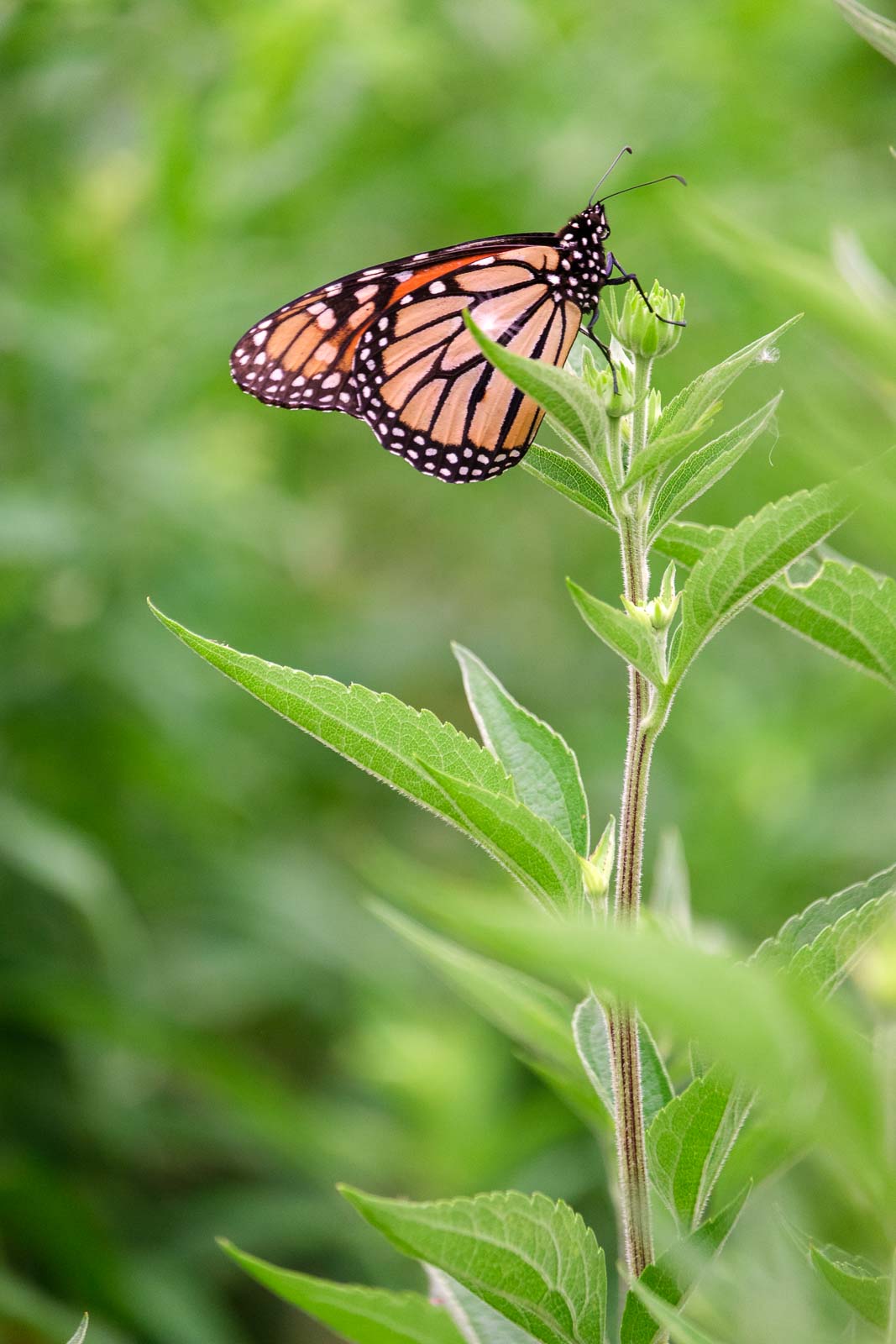
Hundreds of millions of households around the world have a home garden. That is a lot of beds doing a lot of good — more than just the cucumbers and the zinnias and the turnips you grew despite hating turnips.
When that many gardeners are making decisions about what to plant, what to spray, and what to pull, the tools they trust to help guide those decisions have a responsibility to get it right.
That’s why when you ask for advice, or to help ID something in your garden, Percy answers from a place of ecological stewardship. Percy celebrates the natives, calls invasives by name, and always suggests organic options first.
Not because chemicals don’t work. Because the bees don’t have a lobbyist, and somebody has to think about them.
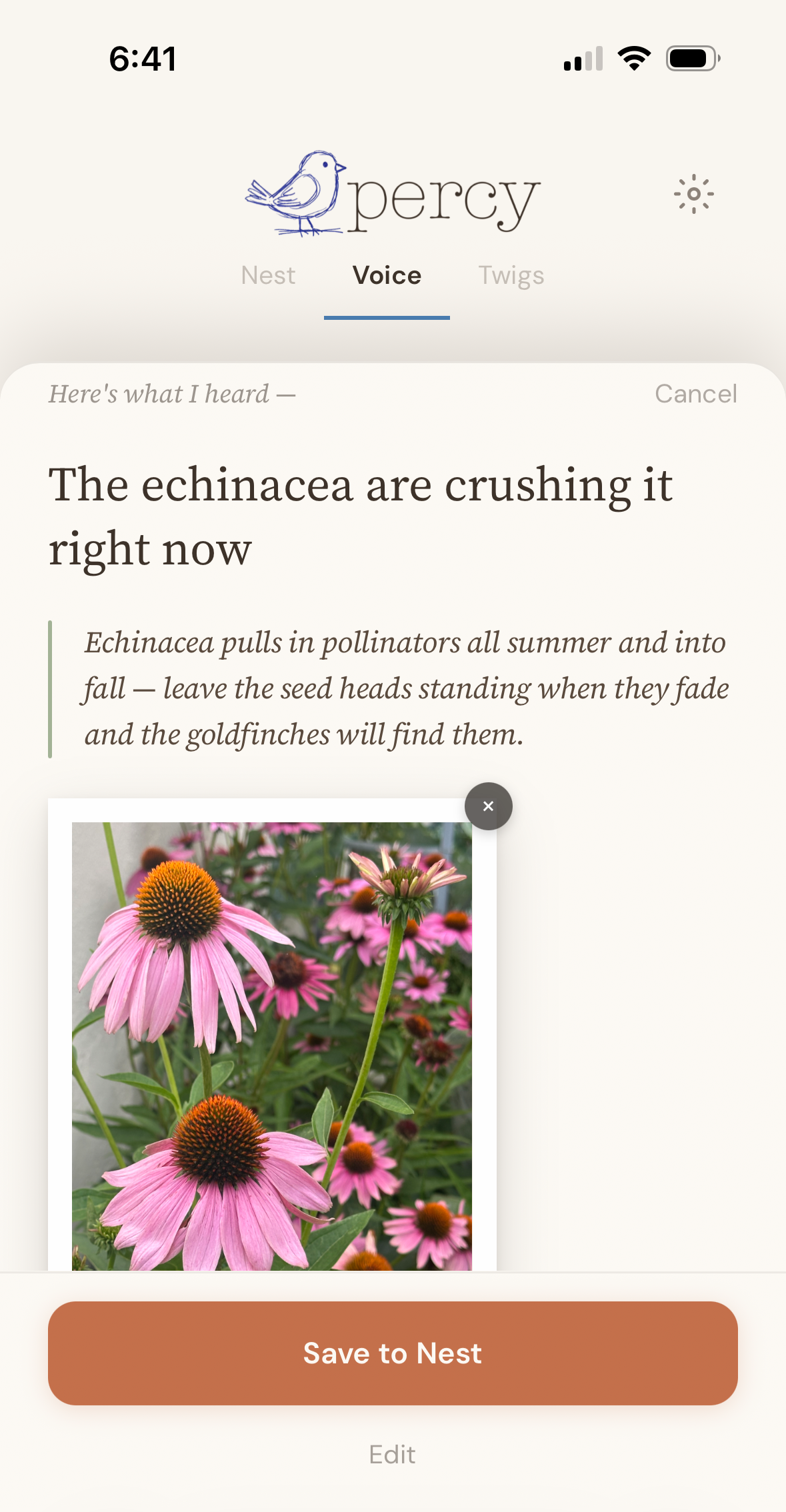
Percy supports native plants.
Native plants are vital homes, host plants, and food sources for local wildlife. So when you ask about a patch of “weeds” and it turns out to be an important native plant, Percy calls it out and makes you feel like a hero for having it in your yard.
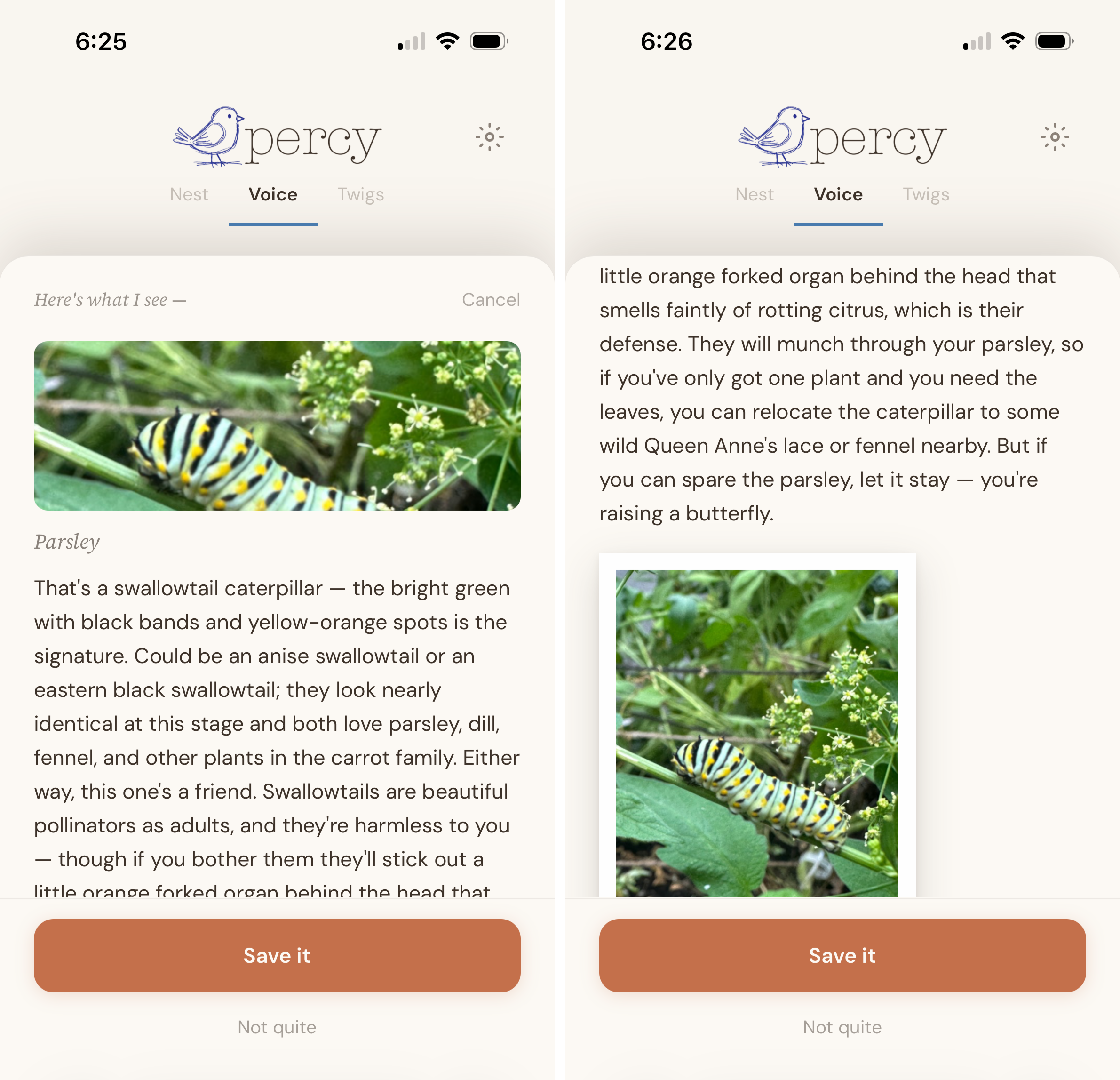
Percy helps you know the friends from the foes.
When you ask whether to spray a bug, Percy recognizes a beneficial insect and tells you to hold off. That one’s doing your work for you.
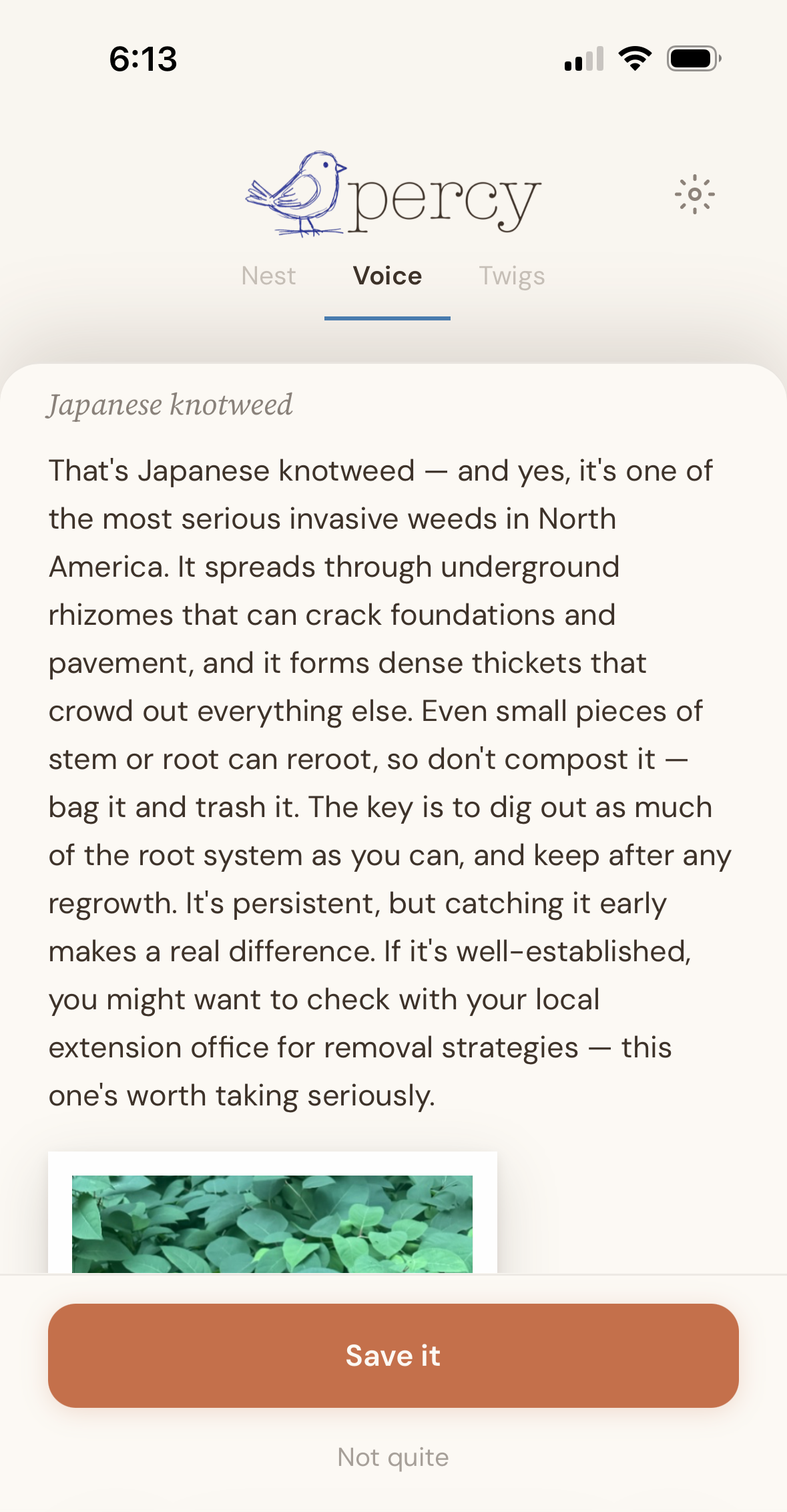
Percy helps you fight the invasives.
Some plants — including some sold as ornamentals at nurseries — are dangerous invasives that are doing real damage. Percy identifies invasive plants and helps you know how to get rid of them. Fighting invasives is the good fight. Percy is built to cheer it on.
Percy is region-correct, or it’s quiet.
Percy tells you whether a plant is invasive where you garden, and celebrates the natives. Its ecology advice is grounded in trustworthy government sources — the USDA in the US, DEFRA in the UK, and their national counterparts in Canada and Australia, the four regions where Percy currently has confident data. In the US, that includes the federal noxious weed list and your own state’s noxious-weed list, plus its invasive-plant list where the state publishes one. If it can’t be confident about your regional ecosystem, it says nothing. Being confidently wrong about your corner of the world is worse than staying quiet. A plant that is native in one place can be invasive in another.
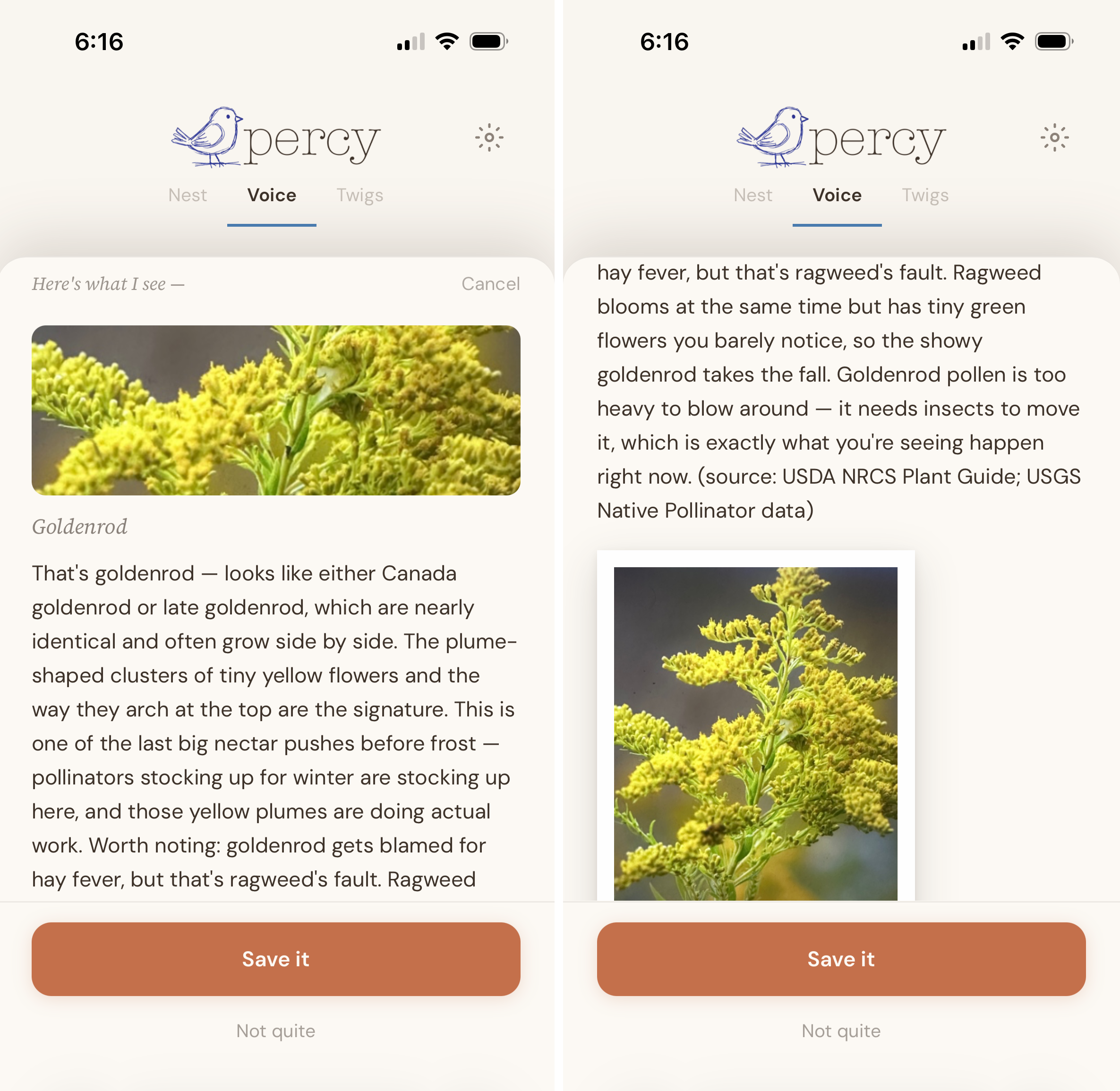
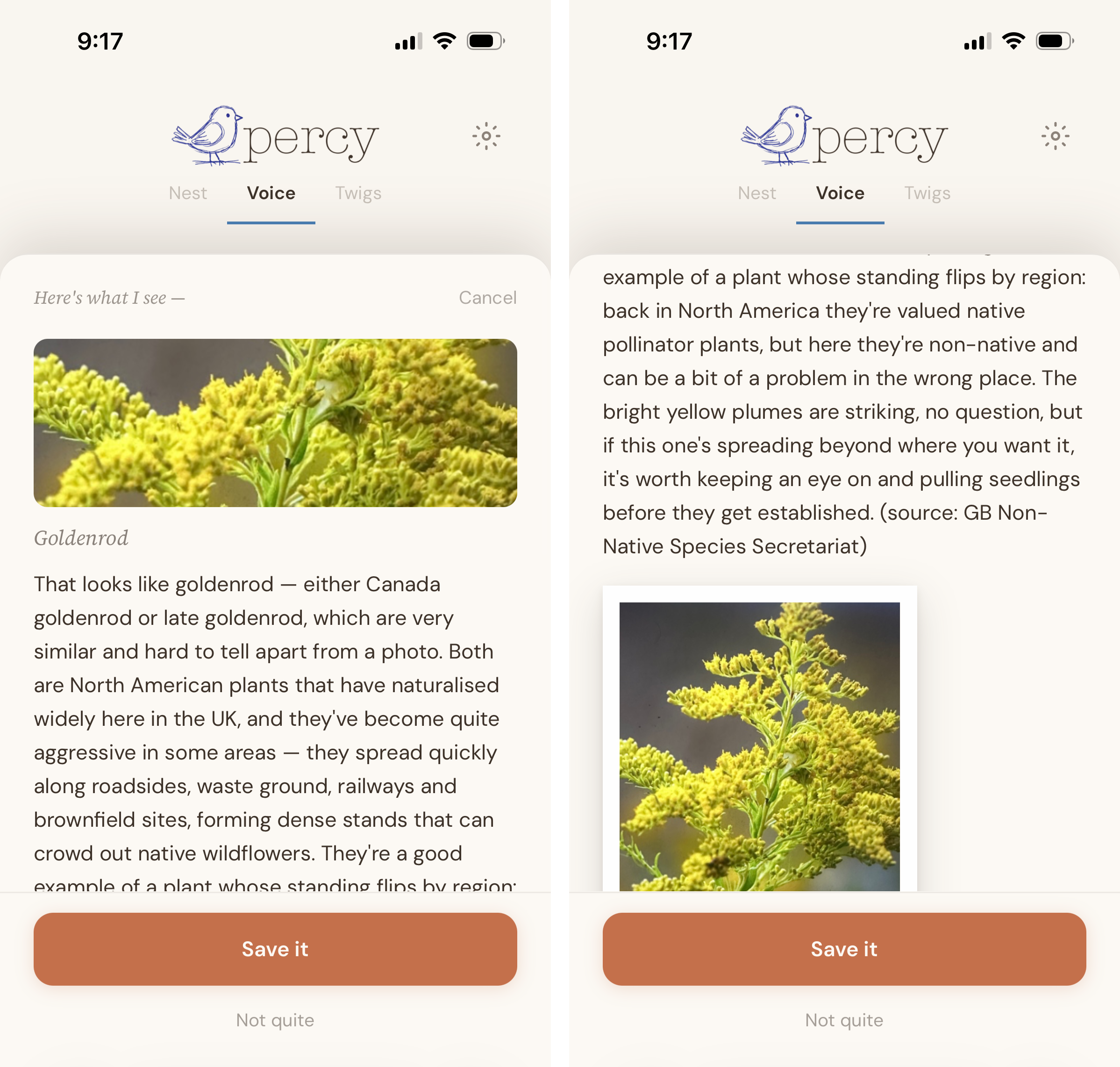
Percy will tell a gardener in New York that the goldenrod they took for a weed is one of the most valuable plants they could grow. It would tell a gardener in London the opposite — because there, goldenrod is an aggressive invasive.
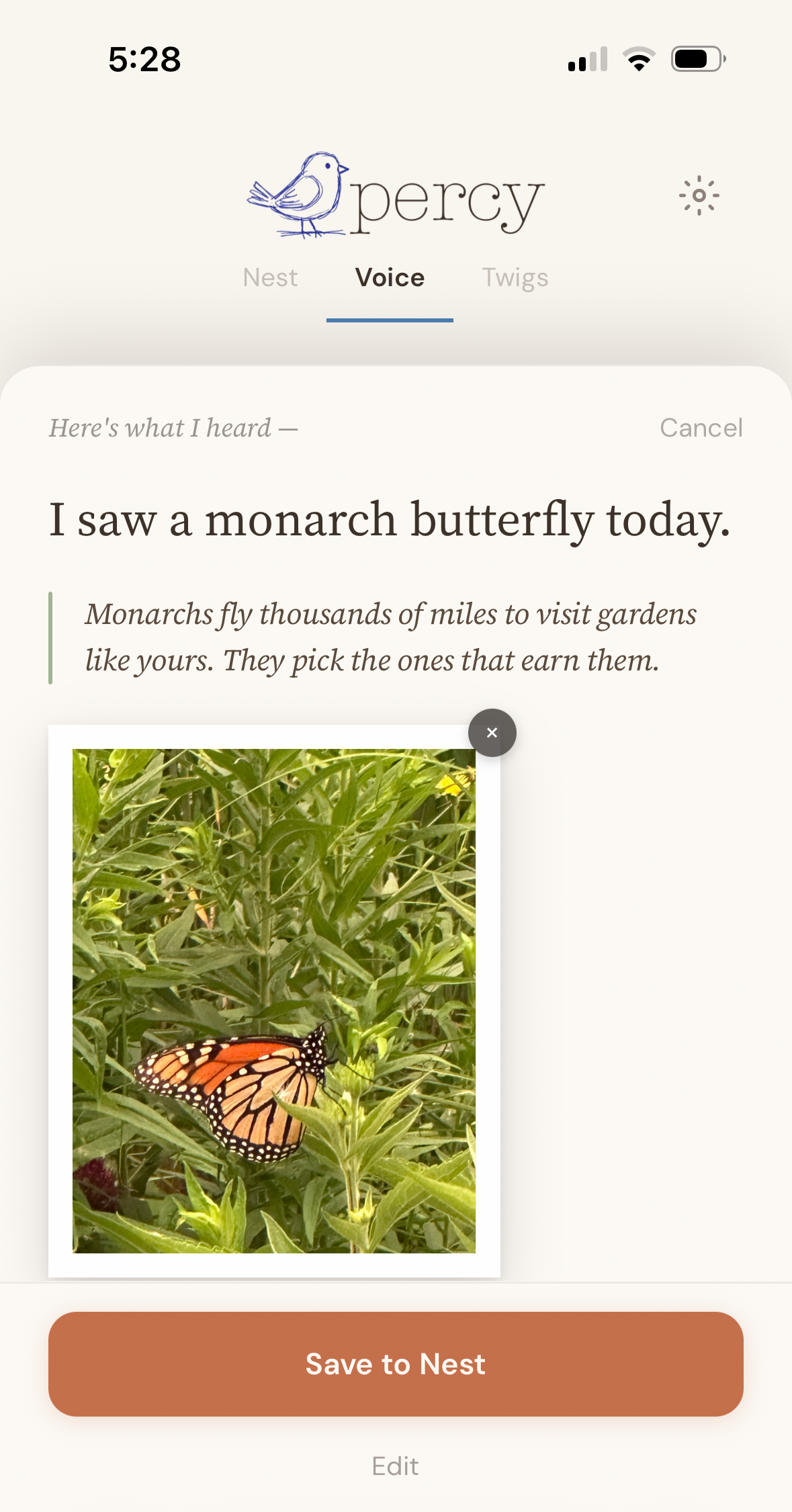
None of these moments arrive labeled ecology. They arrive labeled wonder — the awareness accumulates one observation at a time, inside a conversation gardeners are already having about something they already love. That’s the idea. Stewardship sticks when it feels like delight.
There’s a longer story behind all this — Accidental Stewardship →
A garden should give something back

Percy is a member of 1% for the Planet — a standing pledge to give 1% of our annual sales to organizations working to make gardens better for the living things around them.
We’re starting with two:
Homegrown National Park believes what we believe. That an ordinary gardener, planting natives and pulling invasives in an ordinary yard, is one of the most powerful forces for biodiversity we have. Millions of small patches, stitched together, add up to something the size of a national park. That’s the future Percy is built for.
The Wildlife Trusts are building a Nature Recovery Network. The conviction that gardens, parks, verges, reserves and rivers, connected across a whole country, let wildlife move, feed and breed again. It’s the same belief from the other side of the Atlantic: a single garden matters most when it’s part of something larger. That’s the world Percy is trying to help gardeners build, one patch at a time.
An honest word about the AI part
Percy is an AI garden journal, and I know that sits a little uneasily next to a page about caring for the environment. AI has a significant energy cost.
Here’s the bet I’m making. Used in service of making gardeners more attentive to their patch of the world — more likely to leave the leaves for the caterpillars, to skip the spray, to discover their backyard is part of something larger. I think this produces far more good than the energy it costs.
And the cost is genuinely small: Percy is built to use small, efficient models for the everyday work, so a full season of use runs about the energy of leaving a single LED bulb on for an evening. One round trip to the garden center in an average car produces hundreds of times more carbon than Percy does for a user in a whole season.
Whether the bet pays off is a fair question, and I don’t fully know yet. But I’d rather point some of this technology at something that matters — helping people care for the patch of the world right outside their door. If you want the actual math — where the numbers come from, and where they could be wrong — I’ve published the whole methodology.
Enjoy your garden. Percy remembers it.
Free this season · $39/year after · No credit card


Already using Percy? Here are 10 ways to get more out of it.