Percy is here so you can enjoy your garden.
It's a garden journal that remembers, built by a home gardener who'd rather be gardening.

See the story behind Percy.
How Percy started
I’ll give you the short, less indulgent version first.
I have three notebooks with six entries each, none of them dated, one of them containing a grocery list. I did not simply remember things. Then I realized AI made something possible for gardeners that had never existed before: an actual garden memory. A way to capture time and understand your garden across seasons. What you planted, picked, and noticed. What worked. What was beautiful. And what your kid said when she found the first strawberry of summer. Once I saw that, I couldn’t not build it.
That’s the story. Here’s the longer version, starting with the part where I was bad at this.
I didn’t start out as much of a gardener. A few terra cotta pots on a city patio. Some basil that bolted the moment it sensed my optimism, and some mint that staged a hostile takeover of the entire operation. I thought I understood gardening because I killed plants in a more informed way.
Then we moved to the suburbs. A few raised beds became a few more raised beds. I planted fruit trees. I pulled out a section of invasive privet and turned it into a pollinator garden. What started as a casual interest became, quietly and without warning, one of the most meaningful parts of my life.
I’ve thought a lot about what gardening actually gives you.
The obvious answer is tomatoes.
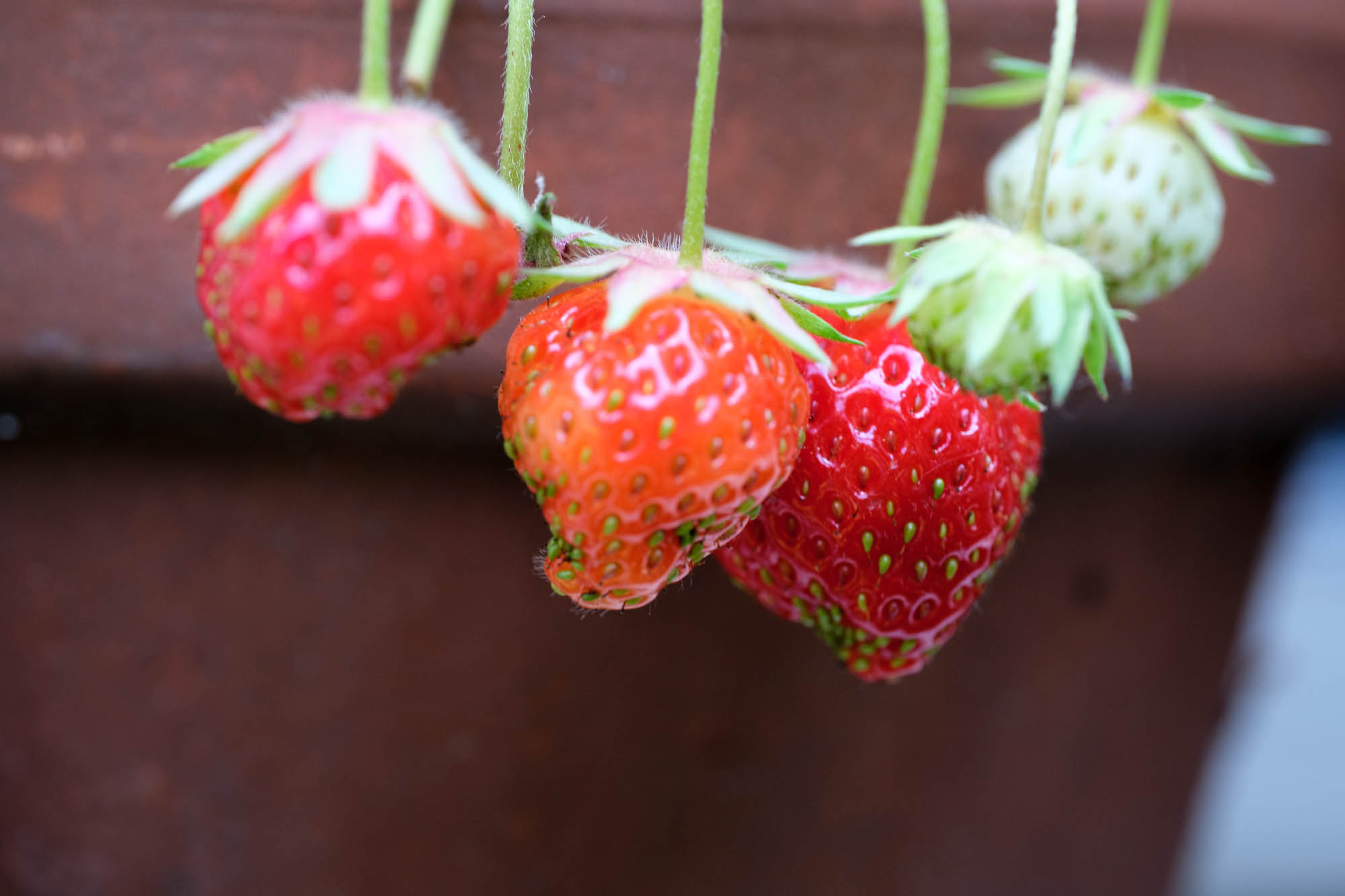
The real answer has always been harder to put a finger on. It’s the morning check-in. Going outside with coffee to see what changed overnight. The hummingbird at the zinnias. The kids picking strawberries, none of which make it back to the kitchen. The satisfaction of watching something you started from seed in February becoming the thing feeding your entire family in August. The patience gardening requires, which turns out to be extremely good practice for everything else in a life raising kids who eat all your strawberries.
None of that fits in a spreadsheet column.
I wanted Percy to handle all of it. The plantings and the harvests and the pest problems and the plans for next year, yes. Every tool tries to do that part, and most of them make it feel like homework. But I also wanted Percy to hold onto the rest of it. The enjoyment. The noticing. The specific satisfaction that comes from looking back at a season and realizing what it gave back (much of which can’t be weighed on a produce scale) and the quiet accumulation that comes from caring deeply about one piece of ground for years. Percy makes sure all of it is captured and nothing is lost between Octobers.
I hope it shows.
Why we built this
Percy is the garden journal that remembers, so you can enjoy your garden. Here’s what that means.
More enjoyment.
Gardening is one of the genuinely good things you can do with your time. It gets you outside. It slows you down. It connects you to something that doesn’t send push notifications or have opinions about your screen time. But somewhere along the way, someone decided that gardeners needed dashboards: plant profiles to configure, tasks to check off, logs to maintain. As if the problem with gardening was that it lacked the texture of a status meeting. Percy is designed to add to the enjoyment of gardening, not to become a second garden that also needs tending.
More success.
Every gardener accumulates hard-won knowledge: what worked in which bed, which variety was worth growing again, when the pests showed up and what actually stopped them. The problem isn’t the knowledge. The problem is that it lives in your head, where it competes for space with grocery lists, commercial jingles and celebrity dating information. Your slug remedy just can’t compete.
Percy holds it instead. Not in a list you’ll forget to check, but in something you can actually talk to. Percy already brings some of it back on its own, like a heads-up before your usual first frost. And it’s learning to do more: “Last year the cabbage worms showed up this week. Might be worth adding row cover.” That’s pattern recognition that used to require years of paying close attention to one garden, and it’s where Percy is headed in year two. So you can focus on enjoying your garden. (Or remembering you’re out of string cheese.)
More presence.
The best moments in a garden happen when you’re paying attention to the garden and not to your phone. The first strawberry ripening. A bumblebee napping on the zinnias. That’s why you just talk to Percy. You hold a button like a walkie-talkie, say what you see, Percy confirms it, and you put your phone away. Ten seconds, and you’re back.
When you know nothing’s going to get lost, you can be fully present. You’re just there, in the moment, with your garden, quietly singing the baby back ribs jingle.
More noticing.
The more you use Percy, the more you start to notice. You start paying closer attention to what’s blooming, what’s changed, what small thing is happening in the corner of the garden you usually walk past.
Noticing is a practice. And when you practice it regularly, something shifts. The garden becomes less about the to-do list and more about the moments. The way light hits the back bed at 7pm. Which pollinators prefer which flowers. The first signs the season is turning.
This is what gardening is really about: paying attention to living things. Percy just makes it easier to show up, notice, and share those moments of gratitude.
Why “Percy”?
The name started with perceive — to notice carefully, to pay close attention. That felt right for something built around the idea that noticing your garden is, in fact, the whole point.
But names have a way of revealing themselves once you’ve committed.
Perch: where a bird lands and goes quiet. Just watching.
Per-see: to see completely. The Latin prefix “per-” means “all the way through.” Percy doesn’t half-remember your garden. It sees it fully — across seasons, in the kind of depth that only comes from showing up year after year.
And then there’s Persephone — the goddess of spring, whose whole story is a seasonal cycle. She descends, and winter comes. She returns, and the garden wakes up. Percy holds everything through the dormant months and brings it back when the growing season does.
That felt less like a coincidence and more like the name knew what it was doing all along.
(It also makes a pretty cute name for that bird.)

Who we are
Percy was built by me (Brian). A home gardener who wanted a better way to hold onto what happens out there. And it remains, for now, a one-person passion project.
No venture capital or board of directors or streak counters or passive-aggressive notifications that remind you that you haven’t logged in for eleven days.
Just an attempt to build something genuinely useful for people who love gardening as much as I do, and who’d rather be outside than in front of a screen. It is, somewhat ironically, an AI product built with the goal of helping people spend more time being human.
If you have ideas, feedback, or something growing you want to tell someone about, I’d genuinely love to hear it. Especially if you know what to do about the slugs.
[email protected]Gardens are bigger than gardens.
Percy is built on the belief that your patch of earth does more good than it gets credit for — and that the good gardener and the good neighbor were always one person. That belief shapes how Percy works: it celebrates the natives you’re already growing, calls invasives by name, and suggests organic options first.
Support indie software. Percy isn’t venture-backed. Your subscription supports one person doing careful, deliberate work to support his family (and his seed catalog habit, which has gotten out of hand). There are no ads or data mining or features added because an algorithm decided they’d improve retention. Just a gardening tool built by someone who actually gardens, for people who actually garden, priced so it costs about what you’d spend at the garden center before you’ve made it past the annuals.
Enjoy your garden. Percy remembers it.
Free this season · $39/year after · No credit card


Already using Percy? Here are 10 ways to get more out of it.