Native Plant Guides · California
Native plants of California and the invasives to kick out
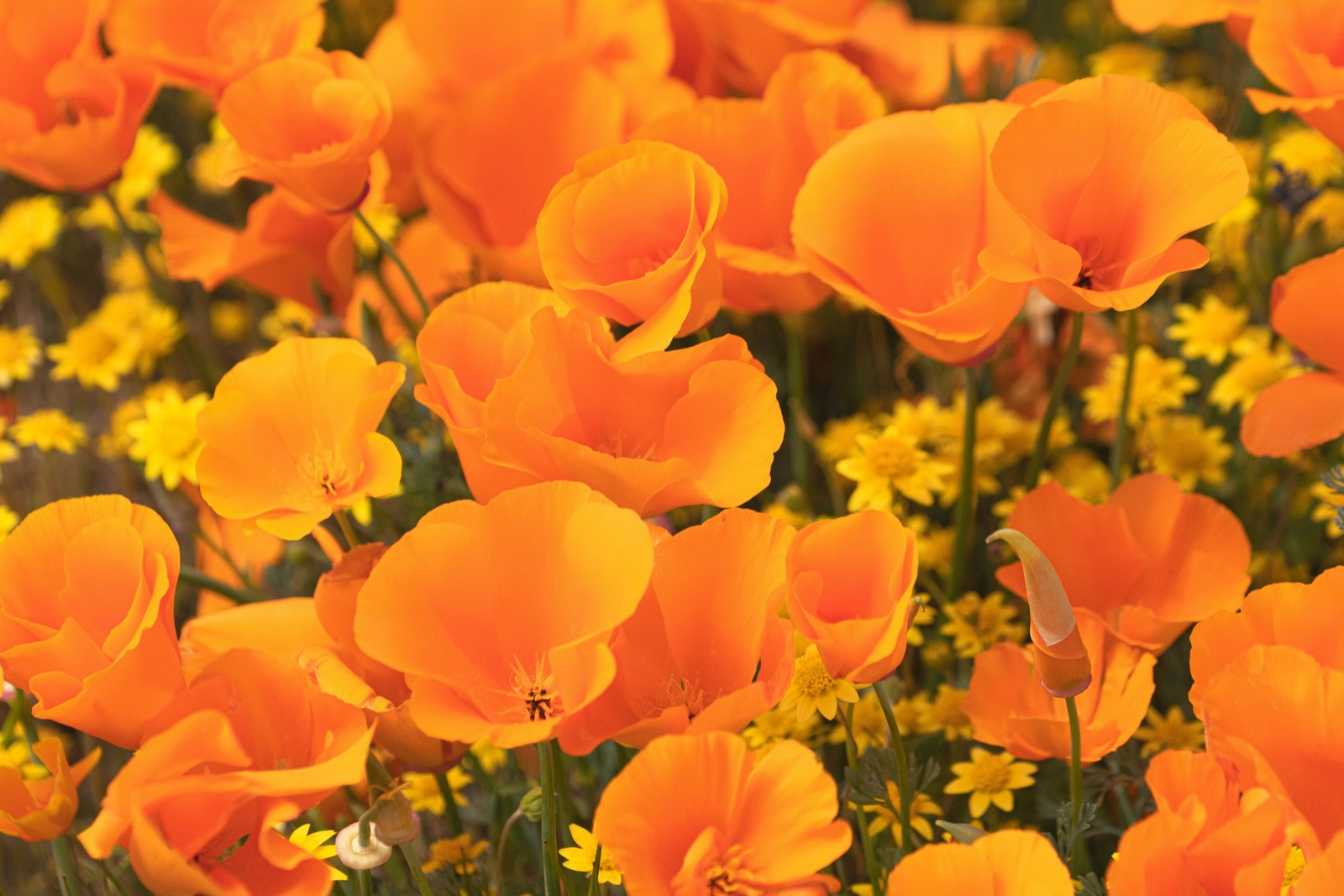
Native plants and local wildlife evolved together here for a very long time. Long before the valleys were filled with silicon. Your neighborhood bees, birds and critters depend on native California plants for food, shelter, and as the hosts that help them make more bees, birds and critters.
As a gardener, one of the most important things you can do to help local wildlife is to grow the native plants in your garden that support them.
But not every plant helps. There are some aggressive invasives that can do serious damage to the state and have written some truly terrible screenplays.
The difference between the two is knowing which plant you're looking at, and whether it belongs in California.
Truth is, there's no such thing as a plant that's native everywhere. A plant that helps pollinators in Sacramento can smother a whole hillside somewhere else. A native in one place is a transplant in another. And while this state is no stranger to transplants, there are some transplants that turn into serious ecological bullies.
California has one of the most diverse climates and growing conditions in the country, and a whole cast of plants that evolved to thrive in specific places. Best of all, most of them (unlike some other native Californians) ask for very little attention once they've settled in.
Good native plants for California gardens include California poppy, locally appropriate sages and buckwheats, California fuchsia, sticky monkeyflower, manzanitas, toyon, western redbud, coyote brush, and native oaks. California also has invasive garden plants worth avoiding, including ice plant, English ivy, periwinkle, pampas grass, fennel, broom, and giant reed. But California is extraordinarily diverse, so "native to California" is only the starting point — the best plants are native to your particular part of the state.
Every native below is verified against Kew's World Checklist as growing wild in California, not just "somewhere in the US."
New to this? Start with what “native” actually means — the same plant can belong in one place and cause harm in another.
California natives worth planting
California may be one state, but botanically it behaves like a whole collection of countries. A plant native to a foggy North Coast redwood forest may have almost nothing in common with one from the Mojave Desert, and something that belongs in a San Diego garden may never have grown naturally anywhere near Sacramento.
So use a statewide list as a starting point, not a shopping list. The best native plant is one that naturally occurs in your part of California and suits the sun, soil, water, and microclimate in your particular garden.
These are just some of the plants that have evolved alongside California's bees, butterflies, and birds. When you plant them in your garden, you're helping out an entire ecosystem — and many of them are built for the state's summer-dry rhythm, so they'll get through the dry months without begging you for water.
That said, California's climate and soil conditions are wildly diverse, so take these as an over-generalized starting point. It should go without saying that what thrives in Mendocino may not be too happy in Palm Springs. (But everyone loves San Diego.)
| If you want… | California native plants to consider |
|---|---|
| Pollinators | California poppy, California buckwheat, Cleveland sage, sticky monkeyflower |
| Hummingbirds | California fuchsia, hummingbird sage, foothill penstemon, pink-flowering currant |
| Low water once established | California buckwheat, white sage, flannelbush, manzanitas |
| Shade / woodland | Western columbine, Douglas iris, pink-flowering currant |
| Small native tree or big shrub | Western redbud, toyon, blue blossom |
| Maximum wildlife value | Coast live oak |
For pollinators and color
- California poppy (Eschscholzia californica) — the poppy is the official state flower, and it acts like it knows it. Silky orange cups that open with the sun and reseed themselves happily across a dry bank. Plant it once and it basically moves in. Full sun · dry to average, well-drained soil · ~1 ft · blooms spring into summer · reseeds freely
- Cleveland sage (Salvia clevelandii) and hummingbird sage (Salvia spathacea) — aromatic native sages the bees and hummingbirds work all season. Brush past one and your whole yard smells incredible. Full sun (hummingbird sage takes part shade) · dry, well-drained soil · Cleveland sage 3–5 ft · hummingbird sage ~1–2 ft · bloom spring into summer
- White sage (Salvia apiana) — a Southern California native with silvery leaves and tall flower spikes that feed native pollinators. It also carries deep cultural significance for Indigenous communities, and wild stands are under real pressure from illegal harvesting — so plant nursery-grown stock, and grow it where it's locally appropriate. Full sun · dry, lean, well-drained soil · 3–5 ft (taller in bloom) · blooms late spring into summer
- California buckwheat (Eriogonum fasciculatum) — an unshowy hero. It blooms forever, feeds a huge range of native bees and butterflies, and helps hold a dry slope together. Full sun · dry, lean, well-drained soil · 2–3 ft · blooms summer into fall · seedheads feed birds
- California fuchsia (Epilobium canum) — these scarlet trumpets bloom in late summer, timed perfectly for the hummingbirds as if they sent a calendar invite. It thrives on heat and neglect which would also make an excellent name for a boy band. Full sun to part sun · dry, well-drained soil · 1–2 ft (spreads) · blooms late summer into fall
- Sticky monkeyflower (Diplacus aurantiacus) — worth growing just so you can say the name while showing people around your garden. Bees and hummingbirds can't leave the apricot blooms on this shrub alone. Contrary to the name, it does not appear to draw sticky monkeys. Full sun to part shade · dry to average, well-drained soil · 2–4 ft · blooms spring into summer
- Matilija poppy (Romneya coulteri) — the famous "fried-egg flower," Matilija poppies have enormous white petals around a gold yolk. It's big, bold, a little theatrical and likely has aspirations of becoming a content creator. Give it room, though: it spreads by rhizomes and can turn into a bit of a territorial landlord once it settles in. Full sun · dry, well-drained soil · 5–8 ft · blooms late spring into summer · spreads by rhizome, give it room
- Foothill penstemon (Penstemon heterophyllus) — electric blue-to-violet spikes the hummingbirds and bees cannot leave alone. Full sun to part sun · dry, well-drained soil · 1–2 ft · blooms late spring into summer
- Western columbine (Aquilegia formosa), Douglas iris (Iris douglasiana), and blue-eyed grass (Sisyrinchium bellum) — these woodland and coastal natives bring early color and structure with very little fuss. Part shade to full sun · average to moist, well-drained soil · 1–2 ft · bloom spring into early summer
- Farewell-to-spring (Clarkia amoena), arroyo lupine (Lupinus succulentus), and checkerbloom (Sidalcea malviflora) — are all reseeding wildflowers that help carry the pollinators from the lush spring months right into the dry summer. Full sun · dry to average soil · 1–3 ft · bloom spring into summer · reseeding annuals & perennials
Trees and shrubs
- Blue blossom / California lilac (Ceanothus thyrsiflorus) — California lilac is a quintessential California shrub. It creates a haze of blue in spring that the bees pour into like it's happy hour and make awkward small talk while looking around to see if there's a better bee they could be talking to. Full sun · dry, well-drained soil · 6–20 ft (varies by form) · blooms spring · resents summer water
- Manzanitas (Arctostaphylos spp., such as Arctostaphylos manzanita) — one of California's signature native shrubs, with smooth mahogany bark you'll want to reach out and touch, this sculptural shrub makes milk bottle-shaped flowers that feed the early bees and hummingbirds. California has many species, each suited to a particular corner of the state, so pick one that's native to your part of it. Full sun to part sun · dry, well-drained soil · size varies widely by species (2–15 ft) · bloom winter into early spring
- Toyon (Heteromeles arbutifolia) — a handsome evergreen shrub with summer flowers for pollinators and bright red winter berries the birds strip in flocks. This one gives you the classic holiday-card look. Ironic sweaters sold separately. Full sun to part shade · dry to average, well-drained soil · 8–15 ft · blooms summer, berries fall into winter
- Western redbud (Cercis occidentalis) — this short tree puts on a magenta blossom show in early spring, before the leaves even show up. It's a good way to welcome the early pollinators back with some fireworks. Full sun to part shade · dry to average, well-drained soil · 10–20 ft · blooms early spring
- Flannelbush (Fremontodendron californicum) — big yellow flowers on a fast, drought-loving shrub. Named because the fuzzy leaves feel a bit like flannel (though they are not plaid). Don't overwater it, this one prefers a bit of neglect. Full sun · dry, lean, fast-draining soil (no summer water) · 6–20 ft · blooms spring into early summer
- Pink-flowering currant (Ribes sanguineum) — one of the early bloomers, this currant's pink tassels help feed the hummingbirds at the end of winter when there's not much else on the menu. Part shade to full sun · average, well-drained soil · 5–10 ft · blooms late winter into spring
- Coyote brush (Baccharis pilularis) and western spicebush (Calycanthus occidentalis) — these two are reliable native backbone. Coyote brush is a late-season nectar bar for pollinators when almost nothing else is still open. And if you drop it off a cliff it holds up a little sign that says "yikes." Full sun to part shade · coyote brush: dry, any soil · spicebush: moist soil · 3–12 ft · coyote brush blooms fall, spicebush late spring into summer
- Coast live oak (Quercus agrifolia) — if you plant one thing for wildlife, make it an oak; a native oak supports more life than almost any other tree. Coast live oak is the workhorse where it naturally grows — and if it isn't native to your corner of the state, plant the oak that is. Full sun · dry to average, well-drained soil (no summer water near the trunk) · 30–70 ft · long-lived evergreen shade tree
Invasive plants California gardeners should avoid
Invasives are aggressive bullies that choke out native plants and wildlife. They spread like mad, reduce vital food sources and habitat, and can wreck entire ecosystems. TLDR: these plants are a bummer.
Here are the usual suspects:
Widely recognized invasives Percy flags
The ones Percy flags, and that California gardeners run into constantly:
- Ice plant (Carpobrotus edulis) — you've seen it carpeting the coast in fat, juicy leaves. It looks like a tidy ornamental groundcover but underneath that type-A personality, it's smothering native dune and bluff plants and reshaping entire slopes. Not one to plant, and worth pulling if it's growing in your space.
- English ivy (Hedera helix) — climbs trees, blankets ground, and doesn't know when to stop. It's charming on a British cottage wall, but an absolute menace turned loose in a California canyon.
- Periwinkle (Vinca major and Vinca minor) — don't be fooled by its pretty little blue flowers and adorable name. Periwinkle is a ruthless spreader. It escapes gardens and forms a dense mat that native seedlings can't get through.
- Pampas grass (Cortaderia selloana) — you've seen this grass with giant feather-duster plumes. One plant can throw seed for miles. It takes over coast, canyon and creekside with alarming ease.
- Fennel (Foeniculum vulgare) — Fennel is great in a kitchen, but a real problem on a hillside. It escapes gardens and takes over open ground in tall stands that crowd the natives out.
All of these escape gardens and spread into wild ground along the coast, in canyons, and down creek corridors, crowding out the natives above. None is one to plant, and several are worth removing.
Also designated noxious weeds under California law (CCR Title 3 §4500)
California officially designates these as noxious weeds under state law (CCR Title 3 §4500). What that means on the ground depends on the plant's pest rating and your county agricultural commissioner — a couple carry an active control rating, most are listed without one. Either way, they're baddies worth fighting.
- Yellow starthistle (Centaurea solstitialis) — this plant is a spiny yellow scourge of California hillsides and roadsides. It's aggressive. It's prickly. And it's toxic to horses. If you've got it, get rid of it and shout some insults while you're at it.
- Scotch broom (Cytisus scoparius), French broom (Genista monspessulana), and Spanish broom (Spartium junceum) — the broom family sounds tidy. It's anything but. These siblings blanket hillsides in yellow, shoving the natives out, and piling up dry fuel that makes fire season worse. A whole crew of baddies from one unfortunate family reunion.
- Gorse (Ulex europaeus) — thorny, dense, and highly flammable. Miserable to remove and a fire hazard where it takes hold.
- Tree of heaven (Ailanthus altissima) — this nightmare plant had a very good PR team. It resprouts from the tiniest root fragment, so you can cut it down and it'll be back like a botanical cyborg from Terminator. Persistence is required.
- Giant reed / Arundo (Arundo donax) — Giant reed looks like bamboo's overgrown cousin. It chokes out creek and river corridors, soaks up scarce water and is highly flammable. It's a serious problem along California waterways.
- Jubata grass (Cortaderia jubata) — the wilder cousin of pampas grass, and the worse-behaved of the two. It spreads with abandon.
- Cape ivy (Delairea odorata) — this aggressive vine blankets everything it can climb and smothers natives until they give up.
- Saltcedar / tamarisk (Tamarix ramosissima) — this shrub takes over riverbanks and leaves salt in the soil so nothing native wants to grow there afterward. Rude on multiple levels.
- Purple loosestrife (Lythrum salicaria) — don't be fooled by the attractive purple flowering spires. This is lipstick on a very, very bad pig. Purple loosestrife spreads aggressively through wetlands and can crowd out the native plants that hold those habitats together.
- Canada thistle (Cirsium arvense) — despite the name, it's from Europe (go figure). Another aggressive spreader that displaces native food sources and habitat and ruins pastureland.
- Tansy ragwort (Jacobaea vulgaris) — these cheerful yellow daisies hide a nasty streak: it crowds out native plants and is toxic to livestock. Not a guest you want in the pasture.
If you find one of these invasives already in the garden, the kindest thing for the land around you is to remove it. Your county UC Cooperative Extension office can point you to the safe way.
California native plant and invasive species resources
A few authoritative places to dig deeper:
- California Department of Food and Agriculture (CDFA) — California's noxious-weed designations and pest ratings (CCR Title 3 §4500).
- California Invasive Plant Council (Cal-IPC) — the definitive inventory of invasive plants in California's wildlands.
- California Native Plant Society (CNPS) — native plant guidance and the Calscape database for finding plants native to your exact address.
- UC Cooperative Extension / UC Master Gardeners — region-specific planting and safe-removal guidance from your county office.
- Royal Botanic Gardens, Kew — World Checklist of Vascular Plants (WCVP) — the taxonomy and native-range source behind this page.
How Percy helps
Percy is the gardening app that remembers your garden — a journal, planner, and personalized assistant you just talk to. It can identify plants, help you understand whether they're native or invasive where you live, suggest plants that support local wildlife, and remember what you planted and where.
Part of remembering well is knowing what you're looking at, so when Percy identifies a plant it's region-aware. It knows the difference between a California gardener who's got a stand of buckwheat and should feel great about it, and a gardener two states over looking at something that belongs there and not here. It encourages environmentally responsible gardening by flagging California natives worth celebrating and invasives worth removing, based on where your garden actually is. And where it can't be certain, it says so rather than guessing — a wrong call about what belongs in your garden is worse than no call.
You don't have to memorize any of this list. You just have to notice your garden and know you've got someone to ask. Percy keeps the rest and helps you tell natives from invasives.
Frequently asked questions
What plants are native to California? California natives include drought-tolerant wildflowers and shrubs like California poppy, Cleveland and white sage, California buckwheat, California fuchsia, sticky monkeyflower, and matilija poppy, plus native trees and shrubs like blue blossom (California lilac), manzanita, toyon, western redbud, and coast live oak. Native ranges here are verified against the World Checklist of Vascular Plants (Kew).
Are all plants native to California suitable for every California garden? No. California contains dramatically different climates and plant communities, so a species can be native somewhere in the state while being completely inappropriate for your region or site.
What plants are invasive in California? Widely recognized invasives California gardeners encounter include ice plant, English ivy, periwinkle, pampas grass, and fennel. California also legally regulates noxious weeds such as yellow starthistle, Scotch and French broom, gorse, tree of heaven, giant reed (Arundo), and jubata grass.
Is pampas grass invasive in California? Yes — pampas grass (Cortaderia selloana) and its wilder relative jubata grass (Cortaderia jubata) spread readily into wild ground along the California coast and in canyons, and jubata grass is on the state's regulated noxious-weed list. Neither is one to plant. Native grasses and shrubs like coyote brush or a stand of California buckwheat give you the structure without the harm.
What are good drought-tolerant native plants for a California garden? Plenty of California natives are built for the state's dry summers: California poppy, California buckwheat, Cleveland sage, California fuchsia, flannelbush, manzanita, and blue blossom (California lilac) can thrive with little summer water once established (though California natives come from wildly different habitats, so being native does not automatically mean drought-tough) — and they feed local bees, butterflies, and hummingbirds while they're at it. Very California: they'd rather you left them alone.
How do I find native plants for my specific part of California? Start with a location-based tool like Calscape (from the California Native Plant Society), which lets you search natives by your address, then match those to your garden's sun, soil, and water. Percy works from your location the same way — when it identifies or suggests a plant, it reasons from where your garden actually is, not just the state line.
How do I know if a plant is native or invasive where I live? Start with a confident identification, then check it against your specific region — status is regional, so a plant that's fine in one state can be a problem in another. Percy does this the region-aware way: when it identifies a plant, it flags whether it's a native worth celebrating or an invasive worth not spreading, based on where your garden actually is.
Is there a plant identification app that tells you if a plant is native or invasive? Yes — Percy does. Percy is a gardening journal you talk to. When Percy identifies a plant, it also tells you whether it's native or invasive for your specific region. It lets you know the natives worth celebrating and the invasives worth removing, so you know not just what a plant is, but whether it belongs where you garden.
What plant app is best for supporting pollinators and local wildlife? The one that knows your region. Percy flags which of your plants are natives that feed local bees, butterflies, and hummingbirds — and which invasives are quietly starving them out — based on where you live and where your garden actually is.
Native ranges: World Checklist of Vascular Plants, Royal Botanic Gardens, Kew (CC BY 4.0). Noxious-weed status: California Department of Food and Agriculture (CCR Title 3 §4500).