There's No Such Thing as a Native-Everywhere Plant
Brian Eden
A plant can support an ecosystem in one place and damage one somewhere else. Here's how to tell what actually belongs where you garden.
Native plants are having a bit of a moment.
Garden centers are putting "Native" stickers on nursery pots. Search interest has skyrocketed — worldwide Google searches for "native plants" hit an all-time high this past spring.
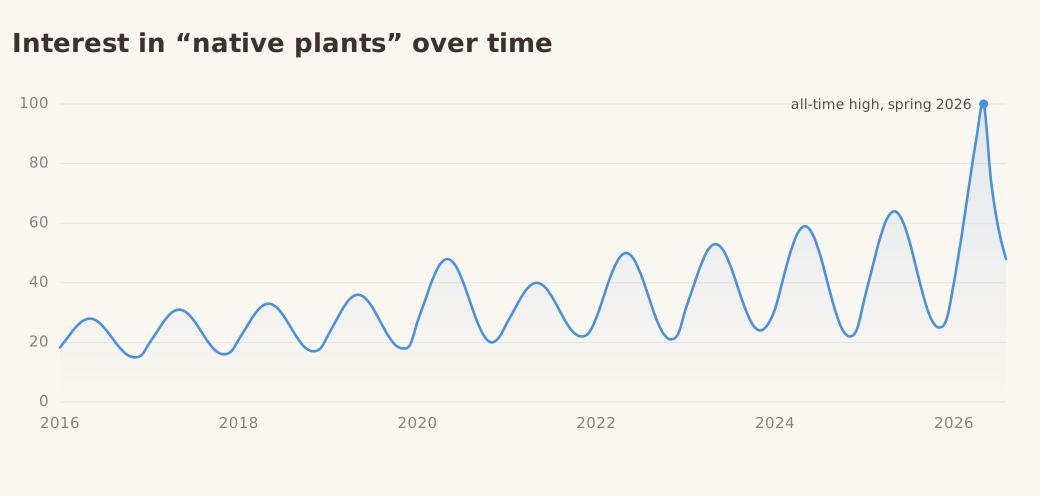
Worldwide search interest in "native plants," 2016–2026. Source: Google Trends.
In response to the demand, one big box store recently wrote a blog post about helping pollinators by planting native plants. It advises "Think native when adding long-lived plants to your landscape. No matter where you are, try butterfly bush, redbud trees, lilies or yarrow."
There's only one issue. There is no "Native everywhere" plant.
Whether a plant is "Native" or not depends entirely on where your garden is.
A native plant is native to a particular place, not everywhere. To know whether a plant is native where you garden, you need three things: a species-level identification, your location, and a trustworthy source for the plant's natural range. And one more important distinction: a plant can be non-native without being invasive. "Invasive" describes the smaller group of non-native species that spread and cause — or are likely to cause — harm.
The same plant can be a gift in one garden and a tyrant in another
Butterfly bush (Buddleja davidii) is a great native to plant if you live in parts of Asia.
But in the UK, Canada, Australia and parts of the US, it's an invasive.
In Washington State, it's a Class B noxious weed, and the species is prohibited from sale or distribution except for approved sterile cultivars.
Some lilies are native to parts of the US. But the orange daylilies (Hemerocallis fulva) that are common at garden centers are also common on many states' invasives lists. And Maryland added it to its Prohibited Invasive Plant List in July 2026, with phase-out periods for existing nursery stock.
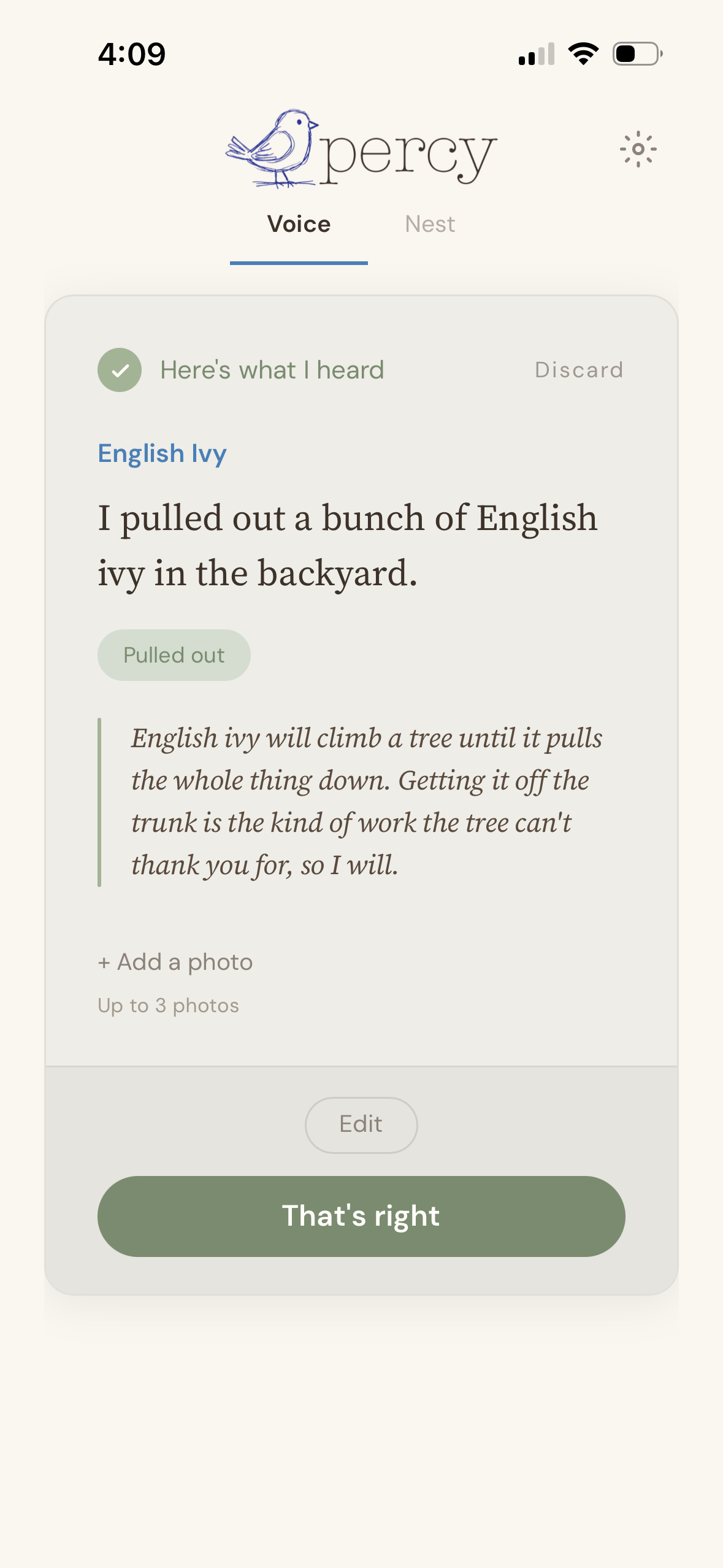
English Ivy (Hedera helix) is another good example of native in one place, a complete train wreck somewhere else. It's native to parts of Europe, Asia and North Africa. But in the US, it can strangle a forest. It blankets forest floors and climbs trees, suppressing native vegetation. In Washington, selected English ivy plants are Class C noxious weeds, and the state added English ivy to its plant quarantine in 2025, prohibiting sale and distribution.
On the flipside, Canada Goldenrod is a hero in much of the US. It's one of the most important flowers you can grow. In London, it's a villain. There it's non-native and can spread aggressively enough that the RHS warns it may become a nuisance.
So the surge in interest in planting native plants is great. But it comes with a very large asterisk that tends to be left out: what plants are "Native" depends entirely on where you're standing.
Why natives are so important
There was a brief stretch when my daughter existed almost entirely on strawberries, bananas and cheese quesadillas.
It turns out a lot of our native wildlife's offspring are similarly picky eaters.
Monarchs are the most famously choosy. Milkweed is the only thing in the entire world that their caterpillars can eat. But there are lots of other species who are similarly selective, albeit less savvy at PR.
The reason is that your local plants and your local wildlife evolved together over thousands of years. Their relationships have grown mutually dependent and very specific. Together, they are a well-tuned machine, like a 5 year old and a quesadilla.
Monarchs are the famous example, but they're not alone. Many butterfly and moth caterpillars can eat only a narrow range of host plants, and some specialist bees collect pollen from only particular groups of plants.
When you plant natives, you're supporting an entire ecosystem and keeping entire species going.
Invasives are the opposite story. Invasives are the small subset of non-native plants that don't stay politely in that middle. They establish, spread, and cause ecological harm. Some gain an advantage because the insects, diseases or other pressures that helped keep them in balance back home aren't doing the same job here. So they spread down creeks, across pastures and into woods while crowding out the species that were already there like a leafy version of The Blob.
The irritating part is that a lot of invasives are attractive. They're sold as ornamentals, encouraged on blogs by well-meaning garden centers, sitting in nurseries looking cute and innocent. They don't look like a problem in a pot. They look like a problem a few summers later, when they've eaten the fence line and strangled out everything else.
Non-native and invasive are not the same thing
Native: evolved or arrived naturally in a particular region. Non-native: introduced outside its natural range. This does not automatically make it harmful. Invasive: a non-native species whose introduction causes, or is likely to cause, environmental, economic or human-health harm.
Between those two extremes of native and invasive is a large middle: plants that simply aren't from here, but also aren't hurting anything. Most of a typical garden lives in that middle, and that's fine. Nobody needs to stage an intervention on every non-native petunia or the majority of things happening in your vegetable garden. Gardening for beauty, food and enjoyment is a worthy cause too.
You just want to know which of your plants are doing active good, which are neutral, and which are worth not letting spread any further.
How do you know if a plant is native where you live?
Plant ID tells you what a plant is. Where you live tells you what that means and if it belongs.
If it all seems like a lot to know, it is. But you don't have to become an armchair botanist. There are lots of resources and some apps that can help you out.
The most important thing to know is: you need three things.
-
A real identification. Complete with the genus and species. Not "lilies." There are over 100 kinds of lilies. Only a handful are native to New York. You need the actual Latin scientific name to know you've got the right one. Just like a person. It's useless to go to California and try to find out if Gary is from there.
-
Where you live. That's the bit that's easy to miss, and it's also the step a simple plant identification doesn't answer. The ID unlocks what plant it is called, what conditions it grows in and how to take care of it. The region tells you whether this orange flower is a garden hero or The Blob in a sundress. A plant ID tells you what you're looking at. Location tells you what that identification means.
-
A trustworthy source of authority. For native and introduced ranges, one strong global authority is the Royal Botanic Gardens, Kew's World Checklist of Vascular Plants, an expert-reviewed database that records both native and introduced distributions. For what's legally considered a noxious or invasive plant, national and state agencies publish lists and regulations.
The ones we use: the USDA and its state-level counterparts in the US; the GB Non-Native Species Secretariat and government invasive-plant lists in the UK; the CFIA and provincial acts in Canada; and WoNS and state declared-weed lists in Australia.
Find native plants where you live
Knowing what's native where you garden is the whole game — so we're building it out state by state. Each guide covers the natives worth planting and the invasives worth keeping out, grounded in the same sources above.
See all native plant guides by state →
How a garden journal can help
When you capture what's growing, what belongs and what definitely does not, the record becomes more and more useful over time. Capture the plant you identified this spring and you'll recognize that it's the same aggressive spreader that keeps popping up no matter how many times you pull it. You'll notice more butterflies showing up around the garden too, and realize it's because the native flower you added isn't just beautiful, it also happens to be their host plant. So adding it in your yard just helped make more butterflies.
Nobody remembers all of that (even armchair botanists).
That's where Percy can be really helpful.
Percy is a garden journal, garden planner, and personalized gardening assistant that remembers your garden — and understands where you garden.
Its plant ID doesn't stop at a name. When you share a photo, Percy can identify the plant and use your location and trusted ecological sources to help explain whether it's native, invasive, or simply non-native where you live.
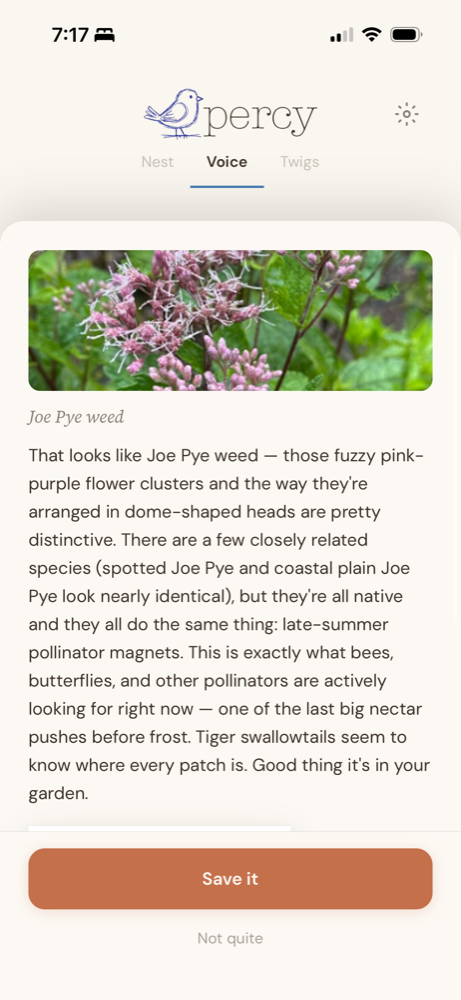
And when the available evidence isn't strong enough to make the call confidently, Percy says so rather than guessing. A wrong answer about what belongs in your garden is worse than no answer. A hard lesson learned by anyone who followed overly-generalized internet advice or nursery pot stickers with butterflies on them.
The point isn't to turn your garden into a compliance exercise. It's the opposite. Knowing what's native and what's invasive lets you focus your energy on the parts that are already doing good, and deal with the one plant that isn't. So over time, your little patch of earth tilts toward a garden that gives something back to the place it's in. And to the tiny butterfly babies who, like our own children, are extremely picky eaters.
Now if you'll excuse me, I have to go cook another quesadilla.
Frequently asked questions
What makes a plant native? A plant is native if it occurs naturally in a particular geographic region without human introduction. Native status always refers to a place.
Can a plant be native in one place and invasive in another? Yes. A species can be part of its natural ecosystem in one region and become invasive after humans introduce it somewhere else.
Are all non-native plants invasive? No. Most non-native species do not cause ecological harm. "Invasive" refers to non-native species whose introduction causes or is likely to cause harm.
How can I tell whether a plant is native where I live? Identify it to species, determine your location, then compare that identification with an authoritative native-range source such as Kew's World Checklist of Vascular Plants or an appropriate regional botanical authority.
Is there a plant ID app that tells you whether a plant is native or invasive? Percy identifies plants and adds regional context, helping explain whether a plant is native, invasive or non-native where you garden rather than stopping at the species name.