Most of What You've Heard About Monarchs Is Half Right
Brian Eden
Every fall, millions of monarch butterflies start a very long road trip from the northern United States and Canada to a small patch of forest in central Mexico. A place most of them have never been, navigating by a combination of the sun's position, the Earth's magnetic field and what scientists describe, with some embarrassment, as some sort of internal compass thingy that we don't really understand yet.
They'll travel up to 3,000 miles (the butterflies, not the embarrassed scientists). They'll arrive at the same trees their great-grandparents once used. Somehow they will make this entire journey to Mexico without once getting help from Waze, nor stopping at Buc-ees.
Your garden is somewhere on the route and they are coming through HANGRY.
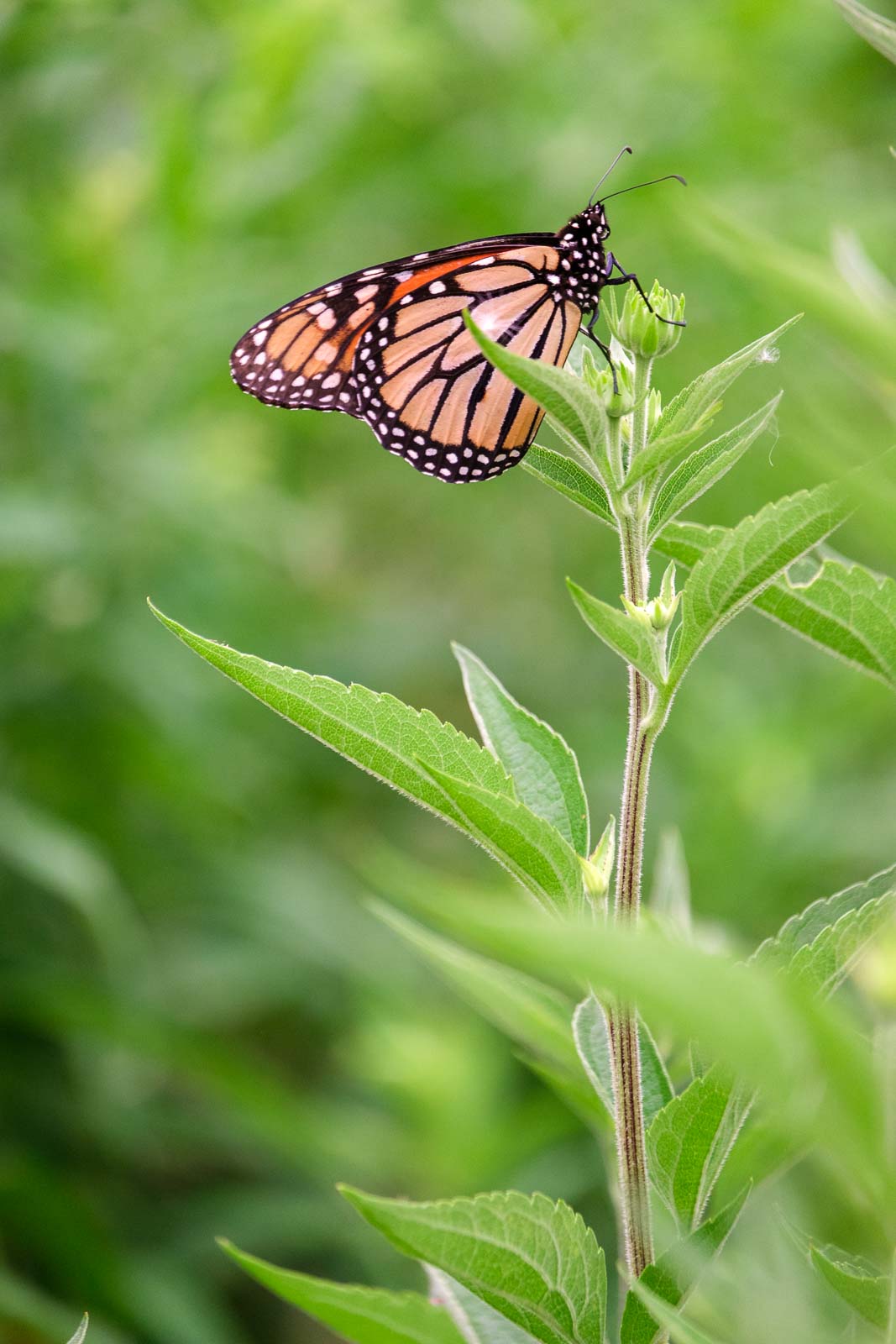
If you've been thinking about how to help the Monarchs, there's a good chance you've been thinking about milkweed. Milkweed is the thing. The only thing monarch caterpillars will eat, the entire basis of the species' reproduction, and the plant that has turned a lot of gardeners into native plant evangelists, for good reason.
It is also, for the butterflies currently passing through your garden, almost completely irrelevant.
Here's the part most people don't know.
The southbound lanes have different needs entirely
The monarchs you're seeing right now are not the same ones you saw in spring. Those butterflies did their job, laid their eggs, passed the torch to a new generation and are now in that great butterfly retirement home in the sky.
The ones you see traveling south are your Spring butterfly's grandchildren or great-grandchildren. This generation has one job and one job only: Mexico or Bust.
These Monarchs won't breed until spring. They'll live for six to eight months instead of the usual few weeks. And they don't need a place to lay eggs.
They need a burrito.
Specifically, a nectar burrito. One from any good flowering plant, consumed in quantities large enough to sustain a several-thousand-mile flight. It makes carb-loading before a marathon look like child's play.
Milkweed is done blooming by now anyway. The caterpillars that needed the Milkweed are already butterflies. The butterflies that are flying south want zinnias.
So: milkweed feeds the caterpillars heading north in spring. Nectar fuels the butterflies heading south right now. These are different trips with different requirements, and most of the well-intentioned monarch gardening advice conflates them.
What actually helps, starting today
If you have zinnias blooming, you're already running an inviting buffet. Same with Mexican sunflower (tithonia). They are heavy nectar producers, they flower through fall, and monarchs are drawn to them like a teenager to a chalupa. If your flower beds are looking tired, you can add a few nursery six-packs of zinnias now and they'll still have time to flower before the hungry wave reaches you.
Among native plants, the late-season bloomers are the ones that help the monarchs (and other pollinators) the most: asters, goldenrod, joe-pye weed, ironweed, and blazing star (liatris). If you're planting those perennials now, you're making a great investment in next year's migration. The flowers will bloom right when they're needed most.
One other thing to know: don't spray anything in bloom. Monarchs are drinking from these flowers. Skip the pesticides, and if you're buying new plants from a nursery, it's worth asking whether they treat their stock with neonicotinoids. Those linger in the plant, and they hurt the friends, not just the foes.
About that milkweed
Plant it. Just not for this.
Late summer is actually not a great time to put milkweed in the ground anyway. Milkweed seeds need to hang out in the cold over winter before they'll sprout, and transplants have a tough time in the late summer heat. Milkweed is a fall or early-spring job, and it's the single most important thing you can do for next year's northbound Monarchs.
One thing worth getting right when you do: only plant milkweed native to your area, not the tropical varietal. Tropical milkweed — the red-and-yellow Asclepias curassavica that's sold at a lot of garden centers, while well-intentioned, causes two problems in mild-winter climates. It stays green year-round instead of dying back, which allows a monarch parasite called OE to build up on the leaves over time. And the evergreen plant, much like too much tequila, can trick monarchs into breeding in winter instead of migrating, which is the one thing this generation absolutely cannot do. Every region has a milkweed native to it. That's the one you want to plant.
If you already have tropical milkweed growing in your garden: cut it back to about six inches in fall and winter. That will sidestep both problems. And when your native milkweed browns out and flops over in fall (which it will, dramatically, in a way that will make you think you've done something wrong) that's supposed to happen. The die-back is one of the signals that tells monarchs it's Go Time.
When to look up
The migration moves roughly south and west over about three months, funneling down toward Texas and on into Mexico. The northern US and southern Canada get going in early-to-mid August. The middle of the country sees the bulk of it in September. Texas gets the parade in October, and the butterflies arrive at their overwintering sites in Mexico around the start of November at which point they throw the most epic party in butterfly history.
It takes a few weeks for the Monarchs to move through any one place, so once the migration reaches your garden, you have a window to catch the spectacle.
The counts matter more than usual right now. Monarchs were proposed for threatened status at the end of 2024, and while the eastern population — which is most of them — has ticked up two winters running, the numbers are still well below where they need to be. A garden with the right flowers open at the right time is exactly the thing they need.
So plant some extra flowers. Keep the zinnias going. And if you see any Monarchs drift through, be sure to tell me. I'll keep it in your garden's season, so you can remember how you helped a wayward butterfly chow down on its way to the party.

A note from Percy
When the monarchs are moving through your area, Percy lets you know, so you can look up at the right time, and appreciate being a part of helping something very small go a very long way home.
That's part of what Percy is for. Not just the harvest logs and the planting records and the pest problems, but the moments that happen between all of that. The things that show up in your garden that you didn't plant and didn't expect. Percy keeps those too.
If you're not using Percy yet, it's free for your first season. No credit card. You just talk about your garden and Percy remembers everything — including the next time a monarch with a tiny rumbling belly drifts through.