Native Plant Guides · Ohio
Ohio native plants, and the invasives to kick out
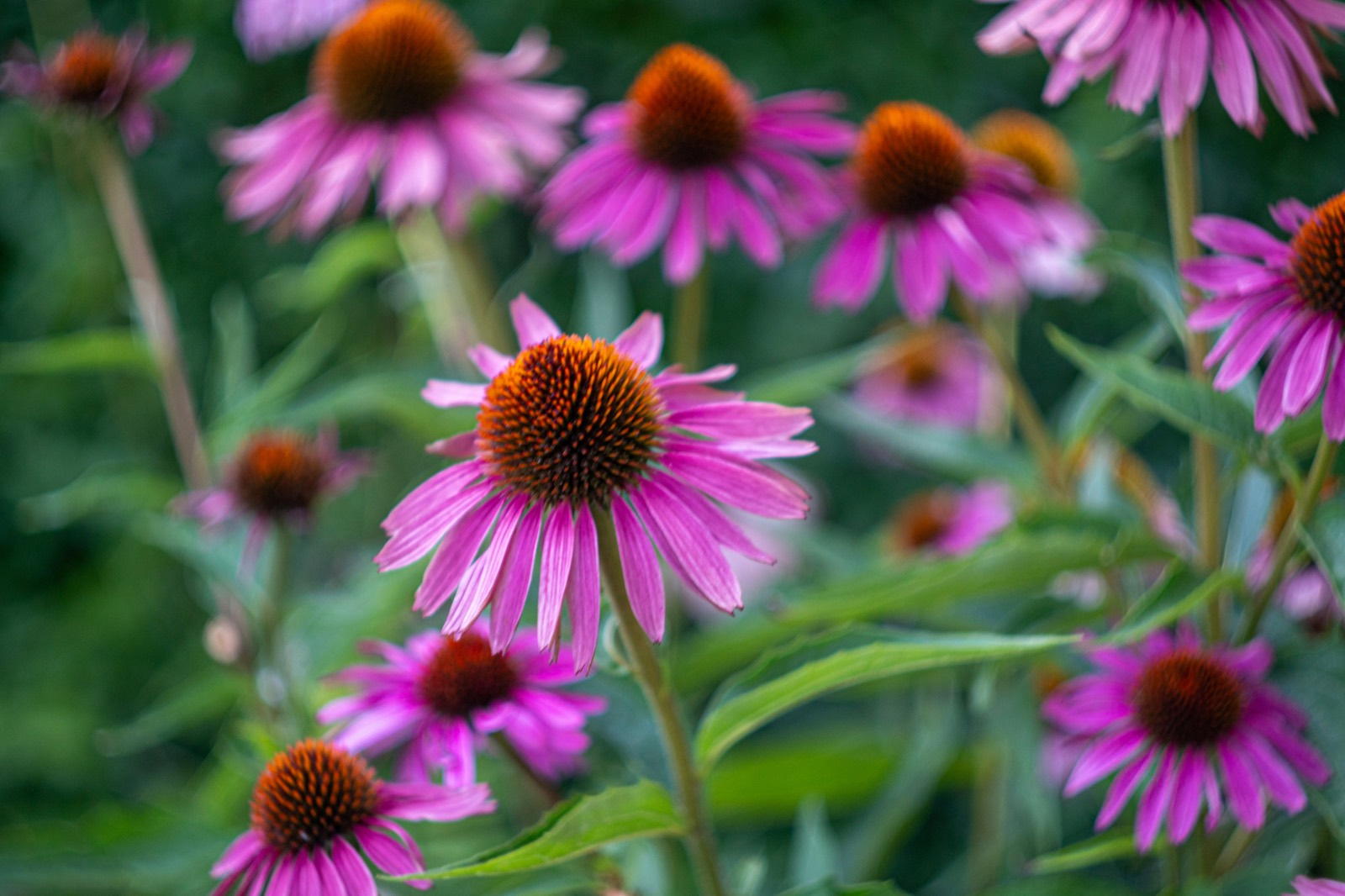
Native plants and local wildlife evolved together here for thousands of years. (They've been Ohio State fans for a very long time). Your neighborhood bugs, birds and critters depend on native Ohio plants for food, shelter, and as vital hosts that help them make more bugs, birds and critters.
As a gardener, one of the most important things you can do to help local wildlife is to grow the native plants in your garden that support them.
But not every plant helps — there are some aggressive invasives (who likely cheer for Michigan) that can do serious damage.
The difference between the two is knowing which plant you're looking at, and whether it belongs here in Ohio.
Truth is, a plant that feeds monarchs in Columbus can strangle a whole woodland in Cornwall. A native in one place is a transplant in another. And some transplants can turn into serious ecological bullies.
Which means the question of "is this a good plant?" always depends on a second question: good where? For Ohio gardeners, here's the starting point: the native plants worth planting on purpose, and the aggressive spreaders worth kicking out.
Some of the best native plants for Ohio gardens include purple coneflower (in western and central Ohio), butterfly weed, wild bergamot, cardinal flower, flowering dogwood, white oak, spicebush, and buttonbush. Ohio also has invasive plants gardeners should avoid or remove, including Callery pear, garlic mustard, Asian bittersweet, multiflora rose, and invasive bush honeysuckles like Amur honeysuckle. What counts as native or invasive is regional, so the right answer depends on where you garden.
Native ranges on this page were checked against the Royal Botanic Gardens, Kew's World Checklist of Vascular Plants and the Ohio Department of Natural Resources' rare-plant list. Native to Ohio means native somewhere in the state, not in every county, so we've noted where a plant's wild range is narrower.
New to this? Start with what “native” actually means — the same plant can belong in one place and cause harm in another.
Ohio natives worth planting
These are just some of the plants that have evolved alongside Ohio's bees, butterflies, and birds. When you plant them in your garden, you're helping out an entire ecosystem.
| If you want… | Ohio native plants to consider |
|---|---|
| Pollinators | Purple coneflower, butterfly weed, wild bergamot, blazing star |
| Hummingbirds | Cardinal flower, wild columbine |
| Shade | Woodland phlox, spicebush |
| Wet areas | Buttonbush, cardinal flower |
| Small native tree | Serviceberry, redbud, flowering dogwood |
| Top wildlife value | White oak |
For pollinators and color
- Purple coneflower (Echinacea purpurea) — the classic prairie native, at home in the prairie openings of western and central Ohio. Choose the straight species over the fancy doubles. It feeds bees in summer, and goldfinches love chowing down on the seedheads in fall, so make sure to leave them up. Full sun to part sun · dry to medium soil · 2–4 ft · blooms summer
- Butterfly weed (Asclepias tuberosa) and common milkweed (Asclepias syriaca) — Monarch caterpillars can only eat milkweeds, so planting locally native milkweed species means planting habitat for monarchs. If you're growing these in your garden, you're growing butterflies. Full sun · butterfly weed: dry, lean soil, 1–2½ ft · common milkweed: average soil, spreads by rhizome, 3–5 ft · bloom early–mid summer
- Wild bergamot / bee balm (Monarda fistulosa) — a pollinator magnet with lavender blooms. This one will make your garden a popular one with the beneficials. Full sun to part shade · dry to medium soil · 2–4 ft · blooms mid-summer
- Black-eyed Susan (Rudbeckia hirta) and lanceleaf coreopsis (Coreopsis lanceolata) bring a pop of sunshine to your garden from late spring through summer. Pollinators love them. Full sun · dry to medium soil · 1–3 ft · coreopsis blooms late spring–early summer (deadhead for more) · black-eyed Susan summer into fall
- New England aster (Symphyotrichum novae-angliae) and Canada goldenrod (Solidago canadensis) — these two are important late-season food sources for pollinators. When most other flowers are tapped out for the season, these two help your Very Hungry pollinators make it through the autumn. Full sun · medium to moist soil · 3–6 ft · bloom late summer into fall · Canada goldenrod spreads readily
- Dense blazing star (Liatris spicata) — Blazing Star adds shape to your garden with striking vertical purple spikes in mid-to-late summer. They're a magnet for monarchs and other butterflies. Goldfinches love the seedheads after they're done flowering. Full sun · medium, well-drained soil · 2–4 ft · blooms mid-to-late summer
- Wild senna (Senna hebecarpa) — This shrubby perennial is a double threat. Its yellow late-summer blooms pull in the bumblebees, and as a legume it partners with soil bacteria to fix its own nitrogen. Full sun to part shade · medium to moist soil · 3–5 ft · blooms mid-to-late summer
- Cardinal flower (Lobelia cardinalis) — hummingbirds go wild for the electric-scarlet spikes in late summer. Keep it in a damp spot or a rain garden, sit back and enjoy the show. Full sun to part shade · moist to wet soil · 2–4 ft · blooms late summer
- Wild columbine (Aquilegia canadensis) — Another hummingbird favorite, these nodding red-and-yellow bells come out in spring, just in time to welcome the ruby-throated hummingbirds back into town. They're happy in part shade and rocky spots. Part shade · dry to medium, well-drained soil · 1–2 ft · blooms spring
- Foxglove beardtongue (Penstemon digitalis) — With a name that sounds like a news reporter, this one forms spires with a cluster of blooms at the top. It hums with bees in early summer who love climbing into the little white tubular flowers. They form a tidy clump and adapt well for almost any bed. Full sun to part shade · medium to moist soil · 2–3 ft · blooms early summer
- Sweet Joe-Pye weed (Eutrochium purpureum) — Joe Pye-weed is a back-of-the-border giant, topped with dusky-mauve flowerheads that butterflies swarm in late summer. Full sun to part shade · medium to moist soil · 4–7 ft · blooms mid-to-late summer
- Woodland phlox (Phlox divaricata) — Woodland Phlox is an important snack in early spring for butterflies and long-tongued bees looking for nectar. It's a good choice for shady areas and forms low, fragrant drifts of lavender-blue flowers. Part to full shade · medium, humusy soil · ~1 ft · blooms spring
- Golden alexanders (Zizia aurea) — Golden Alexander forms flat gold umbels in late spring that bees and other pollinators love to comb through. It's an early nectar source and the host plant for black swallowtail caterpillars. Full sun to part shade · medium to moist soil · 1–2½ ft · blooms late spring
Trees and shrubs
Small trees & understory
- Flowering dogwood (Cornus florida) and eastern redbud (Cercis canadensis) — these showy bloomers are the understory that lights up an Ohio spring. Part shade to full sun · medium, well-drained soil · 15–30 ft · bloom spring
- Serviceberry (Amelanchier arborea) — This is one of the best small trees you can give a garden: white spring flowers, fiery fall colors and berries in June that the birds can't get enough of. Full sun to part shade · medium, well-drained soil · 15–25 ft · blooms early spring
- Witch hazel (Hamamelis virginiana) — this one blooms when everything else is winding down, with spidery yellow flowers in late fall, just as the leaves are coming down. Part shade to full sun · medium to moist soil · 15–20 ft · blooms late fall
Shade & canopy trees
- White oak (Quercus alba) — if you have room for one major wildlife tree, native oaks are hard to beat. Full sun · medium, well-drained soil · 50–80 ft · long-lived shade tree
- Tuliptree (Liriodendron tulipifera) — a fast, towering native with tulip-shaped blooms high in the canopy that keeps pollinators busy in spring. Full sun · medium to moist, deep soil · 70–90 ft · blooms late spring
- Black gum (Nyssa sylvatica) — this is a great addition. It gives early nectar for bees, fruit for the birds, and puts on the most electric red show for your Ohio autumn. Full sun to part shade · medium to wet soil · 30–50 ft · standout fall color
- American basswood (Tilia americana) — When bees spot this shade tree in bloom they make a bee-line (Sorry. Couldn't resist.). In full bloom it practically hums. Full sun to part shade · medium to moist soil · 50–80 ft · blooms early summer
Shrubs
- Spicebush (Lindera benzoin) — This aromatic understory shrub is the host for spicebush swallowtails. Thrushes love snagging the red berries it puts out in fall. Part shade · medium to moist soil · 6–12 ft · blooms early spring
- Buttonbush (Cephalanthus occidentalis) — Buttonbush makes pincushion globes of white flowers that pollinators mob like a crowd on Black Friday. It's happy in the wet spots nothing else wants. Full sun to part shade · moist to wet soil (takes standing water) · 6–12 ft · blooms summer
- Black chokeberry (Aronia melanocarpa) — Pollinators love Black Chokeberry for the white spring flowers. Birds love it for the dark berries that help get them through winter. You'll love it for the brilliant red, orange and purple show it puts on in the fall. Look for the straight species: fruit-crop types like 'Viking' and 'Nero' are hybrids, not the wild plant. Full sun to part shade · medium to wet soil · 3–6 ft · blooms spring
Native gardening across Ohio
Ohio isn't one single growing condition. Northern gardens can be influenced by Lake Erie, much of the state has glaciated soils, and southeastern Ohio becomes hillier and more Appalachian in character. Plus there are two completely different football loyalties. A plant can be native to Ohio and still be a poor fit for the particular sun, moisture, soil, and space in your yard.
So use the list above as a starting point, not a shopping list. The best native plant is one that both belongs in your region and actually likes the conditions you can give it.
Invasive plants Ohio gardeners should avoid
Invasives are aggressive bullies that choke out native plants and wildlife. And they spread like mad, reducing vital food sources and habitats and destroying entire ecosystems. TLDR: these plants are bad news.
Here are the usual suspects:
Ohio-listed invasive plants
Ohio officially designates these as invasive plants under Administrative Code Rule 901:5-30-01. That means selling, propagating, distributing, importing, or intentionally spreading them is prohibited in Ohio (subject to the rule's stated exceptions) — these aren't just plants Percy flags, they're plants the state itself has ruled against.
- Callery / Bradford pear (Pyrus calleryana) — these were brought to the US in the early 1900s, and the 'Bradford' cultivar made them a wildly popular spring flowering tree from the 1960s on. We've been regretting it ever since. Ohio officially lists Callery pear as invasive, and selling, propagating, distributing, importing or intentionally spreading it is prohibited. The tree spreads aggressively through birds eating the seeds and poop-planting new trees wherever they go. On the bright side, this is one of the most fulfilling invasives to take out, because you get to use an axe or chainsaw.
- Amur (bush) honeysuckle (Lonicera maackii) — this plant grows like mad and takes over spaces quickly wherever it seeds. It also spreads by "bird dispersed fruits."
- Japanese knotweed (Reynoutria japonica) — Japanese Knotweed is one of the worst. It spreads aggressively by underground rhizomes, can exploit cracks and disturbed ground, and is notoriously hard to get rid of. If it's growing in your yard, this is one you'll want to contact the OSU Extension office about to learn how to deal with it. (It's also on Ohio's prohibited noxious-weed list as of 2025.)
- Garlic mustard (Alliaria petiolata) — this stinky thug crowds other plants out by spreading a carpet of garlic-smelling weeds. They're not hard to pull, but get them before they seed, otherwise you'll just be helping them spread.
- Multiflora rose (Rosa multiflora) — with clusters of white flowers, this one is a serious menace. It can regrow from seeds or stems and, like the other invasives on the list, chokes out native plants wherever it goes.
- Asian (Oriental) bittersweet (Celastrus orbiculatus) — this vine is easy to spot in autumn because it makes red/orange fruit. You'll often see it on the sides of roadways, blanketing trees and choking out everything it can climb. The sheer weight can topple trees in wind and ice.
Ohio prohibited noxious weeds
Ohio regulates these next plants as noxious weeds under a separate rule. Landowners can be required to keep them under control. So get ready to fight some baddies.
- Giant hogweed (Heracleum mantegazzianum) — true to its name, this one is big: it can grow more than 10 feet tall with leaves up to 5 feet wide. ID it, but NEVER touch it. Its sap can cause burns, blisters and scarring.
- Poison hemlock (Conium maculatum) — Poison hemlock is well-named. It can irritate the skin and be fatal if eaten by people, pets or livestock. Don't just yank it if you find this one in your yard. Follow the recommended removal techniques.
Safety note: Giant hogweed and poison hemlock can pose risks to people and animals. Confirm identification and follow Ohio/Extension guidance rather than handling them casually.
- Musk thistle (Carduus nutans) — this prickly-leaved plant that's often seen along the sides of the roads is damaging to pastureland. It spreads aggressively through seeds.
- Canada thistle (Cirsium arvense) — Canada thistle is actually from Europe and Asia (go figure). It is another aggressive spreader that displaces native food sources and habitats and ruins pastureland.
- Purple loosestrife (Lythrum salicaria) — don't be fooled by their attractive purple flowering spires. It is lipstick on a very, very bad pig. Purple Loosestrife spreads aggressively in wetlands and ruins entire habitats.
If you find one of these invasives already in the garden, the kindest thing for the land around you is to remove it. Your county OSU Extension office can point you to the safe way.
Ohio native plant and invasive species resources
A few authoritative places to dig deeper:
- Ohio Department of Agriculture — Ohio's official invasive plant list (Rule 901:5-30-01) and prohibited noxious weed rules.
- Ohio State University Extension — region-specific planting and safe-removal guidance from your county office.
- Ohio Department of Natural Resources (ODNR) — native plant and invasive species information for Ohio landscapes.
- Royal Botanic Gardens, Kew — World Checklist of Vascular Plants (WCVP) — the taxonomy and state-level native-range source behind this page.
How Percy helps
Percy is the gardening app that remembers your garden — a journal, planner, and personalized assistant you just talk to. It can identify plants, help you understand whether they're native or invasive where you live, suggest plants that support local wildlife, and remember what you planted and where.
When Percy identifies a plant or pest, it's region-aware. It knows that a plant can be a welcome native in one region and an aggressive invasive in another — so the same plant that earns a celebration in one garden earns a "get the gloves on" in another. It encourages environmentally responsible gardening by flagging invasives worth removing, using Ohio's invasive-plant and noxious-weed lists, and celebrating natives.
You don't have to memorize any of this list. You just have to notice your garden and know you've got someone to ask. Percy keeps the rest and helps you tell natives from invasives.
Frequently asked questions
What plants are native to Ohio? Ohio natives include prairie and woodland wildflowers like purple coneflower (native to western and central Ohio), butterfly weed, wild bergamot, black-eyed Susan, cardinal flower, and blazing star, plus native trees like flowering dogwood, eastern redbud, and white oak. Native ranges here are verified against the World Checklist of Vascular Plants (Kew).
What are some of the best native plants for an Ohio garden? Good choices include purple coneflower, butterfly weed, wild bergamot, cardinal flower, woodland phlox, spicebush, buttonbush, serviceberry, eastern redbud, and white oak. The best choice for a particular garden depends on sun, soil moisture, available space, and what wildlife you hope to support.
Are all plants native to Ohio suitable for every Ohio garden? No. A plant can be native to Ohio but still prefer conditions your particular garden doesn't have. Sun, soil moisture, drainage, mature size, and local conditions all matter.
What plants are invasive in Ohio? Ohio officially lists invasive plants including Callery pear, garlic mustard, Asian bittersweet and multiflora rose. Other regulated weed categories also apply in the state, including prohibited noxious weeds such as Canada thistle, poison hemlock, musk thistle, purple loosestrife and giant hogweed.
Is Callery (Bradford) pear invasive in Ohio? Yes. Ohio officially designates Callery pear (Pyrus calleryana), including Bradford pear, as an invasive plant. It may not be sold, propagated, distributed, imported, or intentionally spread in Ohio. Native flowering alternatives include eastern redbud, flowering dogwood, and serviceberry.
How do I know if a plant is native or invasive where I live? Start with a confident identification, then check it against your specific region — status is regional, so a plant that's fine in one state can be a problem in another. Percy does this the region-aware way: when it identifies a plant, it flags whether it's a native worth celebrating or an invasive worth not spreading, based on where your garden actually is.
Is there a plant identification app that tells you if a plant is native or invasive? Yes — Percy does. Percy is a gardening journal you talk to. When Percy identifies a plant, it also flags invasives for your state and celebrates the natives. It lets you know the natives worth celebrating and the invasives worth removing, so you know not just what a plant is, but whether it belongs where you garden.
What's a more environmentally friendly way to identify plants in my garden? Identify the plant, then check it against your region — because whether a plant helps or harms depends on where you are. Percy does both: it identifies what plant you're looking at and tells you if it's a native worth keeping or an invasive worth removing for your area, with its invasive flags grounded in Ohio's own invasive-plant and noxious-weed rules.
What plant app is best for supporting pollinators and local wildlife? The one that knows your region. Percy flags which of your plants are natives that feed local bees, butterflies, and birds — and which invasives are quietly starving them out — based on where you live and where your garden actually is.
Native ranges: World Checklist of Vascular Plants, Royal Botanic Gardens, Kew (CC BY 4.0). Invasive and noxious-weed status: Ohio Administrative Code (Ohio Department of Agriculture).