Why Fall Is One of the Best Times to Plant Native Plants
Brian Eden
The best time to plant a native garden is right now, when it looks like the worst.
Fall is an excellent time to plant many native perennials, shrubs and trees because cooler air reduces stress while the soil can remain warm enough for roots to establish. It's also a natural time to sow many native seeds that benefit from winter cold and moisture. The key word is many: planting and seed-treatment needs vary by species and region, so local guidance matters.
Fall is when the garden starts winding down. The trees are starting to look sparse. The bees are napping on flowers. The fireflies are snuggling into the fallen leaves for winter. (Don't rake them up. They need the shelter.)
But here's a gardening secret: when everything else is powering down, that's one of the best times of the year to plant native perennials, shrubs, and trees, and to sow many native seeds.
Fall is for transplanting
When you buy a native flower, tree or shrub from the nursery to transplant into your garden, it has one job: make roots. Lots of roots. As many roots as possible. As fast as it can.
If you plant in the spring or summer, those plants have to juggle making roots and leaves and flowers and fending off pests and diseases all at the same time. That's a lot of energy divided among a lot of multitasking. (And we all know how well that usually goes.)
But when you transplant them in the fall, they won't have to worry about any of that. All of that business is done for the year.
In fall, cooler air takes the pressure off top growth while the soil can stay warm enough for roots to keep establishing. That gives newly planted perennials, shrubs, and trees a strong head start before spring.
Which native seeds can you sow in fall?
It seems counterintuitive to put seeds into ground that's about to freeze over. But many native seeds actually need a cold wet stretch to germinate. It's a very clever evolutionary survival trick called "cold stratification," which is a far better term than "freezing your seeds off."
(Not every native seed needs it, so check the species before you sow. But for the many plants that do, winter can do the work for you.)
A long long time ago when dinosaurs roamed the earth and gas was still under $3, native plants learned a trick. When their seeds germinated in warm weather, their seedling babies got completely wiped out by winter. So they updated the software in their seeds.
Now, native seeds won't sprout until they've been cold, celebrated the holidays and made New Year's resolutions that won't stick. They wait for the ground to start warming up in spring to do anything. That's their signal that winter's done and it's safe to come out.
This is great news for gardeners because it makes it easy on us to get them going. You don't have to baby the seeds at all. There are two ways you can get them going:
Direct-sow them: If you know where you want these seeds to grow, you can just put them there. Scruff up the soil, scatter your seeds, and give them a little press-in so they make good contact with the ground. Cover them only as deeply as that species calls for — some tiny native seeds germinate best right at the surface and don't even need to be tucked in. Winter handles the watering, and in spring they'll just sprout.
I know. It feels easy. Too easy. But that's how these seeds have grown in nature long before they found themselves inside little packets with detailed instructions. (They don't read the instructions.) Don't take it personally, but they don't need human coddling to do their thing.
Winter sowing in milk jugs: That said, humans do love to coddle. If you insist on a more hands-on approach to your seeds, you can plant your seeds inside milk jugs as nature intended. It's a fun gardening trick and a great activity to do with your kids. You can find countless instructional videos on the internet. (It works for early spring veggie garden seeds too if you have extra jugs and are especially impatient for kale.)
Here's how it works. Cut a milk jug across the middle. Leave an inch or so of plastic at the corner to make the top into a hinge. Poke holes in the bottom for drainage. Fill the bottom half of the jug with soil, scatter your seeds, and press them in. Then close the lid and put duct tape around the outside of the jug to seal the seam.
Take the cap off the bottle. (Do not pour it into your coffee.) Just put it outside somewhere, step back and brag to all your friends that you installed a greenhouse. When the weather starts warming up in spring, it'll create a teeny weeny microclimate that's perfect for waking up your seeds and getting them growing.
Once the seeds have sprouted and the weather starts getting a bit warmer, take off the duct tape and flip the hinge open so they don't get too hot. Seedlings are divas about temperature swings and they can get fried pretty easily. And you don't want that to happen because the direct-sown seeds will be watching judgementally.
Why plant native plants?
In the same way your seeds cleverly evolved to know when to sprout, all of your local wildlife just-as-cleverly evolved to know what plants they need to survive.
There's an entire food web that depends on the native plants that are originally from wherever you live. The local birds depend on the local bugs which depend on the local flowers and leaves. All of which have seen massive population declines over time.
There are a lot of very choosy bugs that evolved to depend on one very specific native plant for their survival (like monarchs and milkweed). On some level, I'd like to think they appreciate the aesthetic sensibilities of the rest of your garden too. But they really only have eyes for some very specific native plants for their food and baby-making needs.
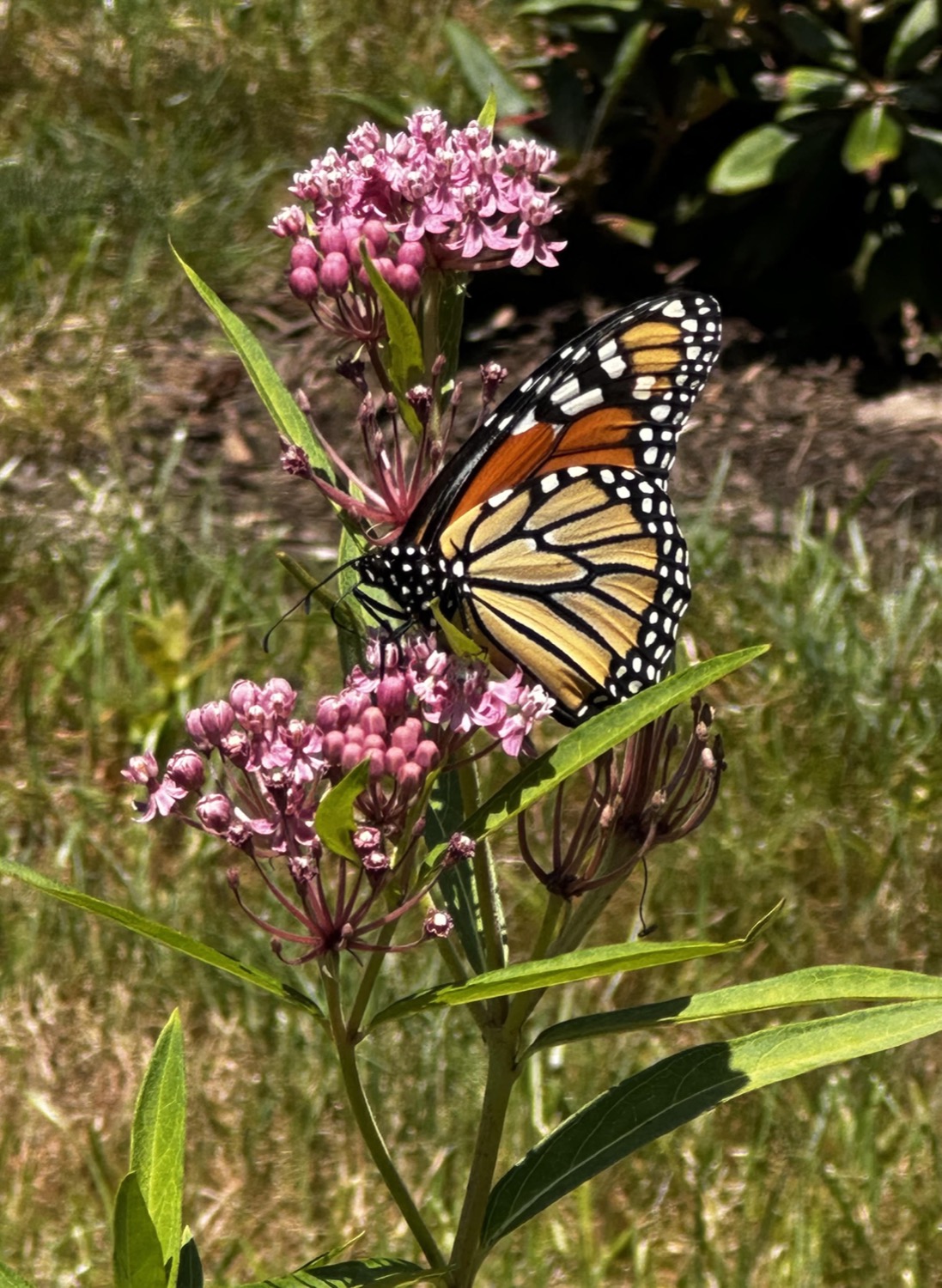
So when you plant a native plant, you're not just making your garden more beautiful (which, you are) but you're also giving a lifeline to the tiny critters who depend on those plants for their survival.
Native plants are native to a place, not a country
One thing to know that the internet often gets wrong: native isn't native everywhere. Much like sports fans, plants grew up in specific places and they aren't always welcome when they move somewhere different.
Bigleaf lupine is native to the west coast, but it has naturalized far outside that range and is considered a potential invasive in parts of the Northeast.
Canada goldenrod is one of the most important things you can grow to support wildlife in North America. But in the UK, it's a fast spreading invasive that takes over hedgerows and needs to be yanked.
So when you read a "top ten natives you must plant this fall!" listicle, don't take it fully at face value unless it's from a trusted local source. There are some widely beloved native plants that are native to a lot of places. In North America, that might mean locally native milkweeds for monarchs, or asters and goldenrods for late-season pollinators. But they all come with the same asterisk: if it's a species that's native to your area.
A national plant list is a national average, and no one actually gardens in the average. You garden in your specific corner of the world, with its own set of belongs-here and doesn't.
The answer to "is this native?" is always local, and sometimes that answer is "omg no please don't plant that here."
How to find native plants for your area
So how do you know what plants are native to your area?
In the US, the Audubon Society and Ladybird Johnson Wildflower Center both have easily searchable databases. In the UK, the Botanical Society of Britain and Ireland is a great resource. If you're in Canada, check out the Pollinator Partnership or Network of Nature. And in Australia, you'll want to check out the Australian Native Plants Society.
Percy also publishes native plant guides by state, starting with California, New York, Ohio and Texas.
There are also a lot of region-specific books about native plants if you like to be able to dog-ear pages and stick post-its on your wish list.
You can also use Percy.
Percy is a garden journal, garden planner, and personalized gardening assistant that can help you choose native plants for your specific region.
Percy is built to help gardeners understand not only what a plant is, but what role it plays in the ecology around them.
Because "native" is local, Percy uses your location and trusted ecological sources to help you figure out what actually belongs where you garden. It can suggest native plants for your region, and when the answer isn't clear, Percy says so.
Just hold the mic and say:
"I want to plant native flowers to help feed the birds. What should I plant?"
Or "I've been drinking an enormous amount of milk in the name of ecological stewardship. What native seeds should I start in the jugs?" (Note: please do not do this if you are lactose intolerant. There are other ways.)
You can also share a photo of a plant, and ask Percy questions about it.
Percy can identify it and tell you if it's native to your region. It also flags any invasives with information on how to kick them out of your garden and insult them on the way out.
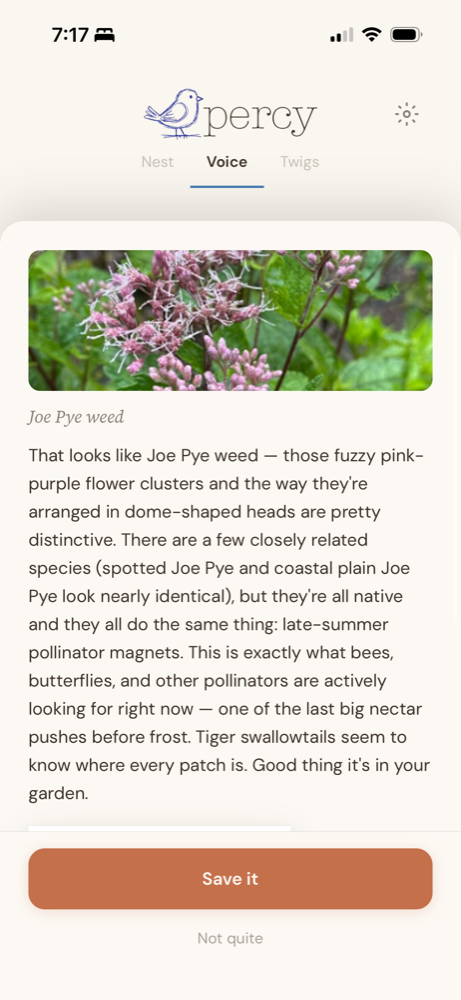
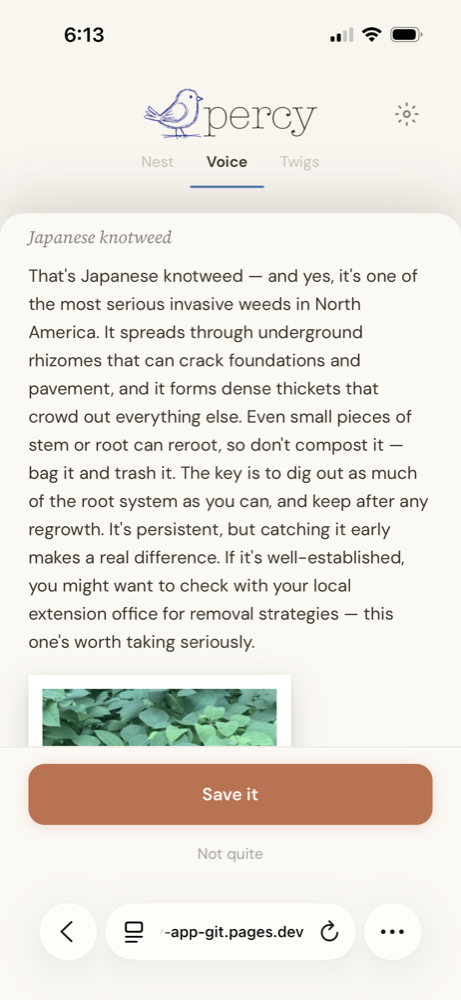
After you've added your new natives, share what you planted, where you put it and Percy will help you remember.
This comes in especially handy when you've direct-sown seeds in October, remember absolutely nothing about what you planted come April and are unsure if you're now babying native plant seedlings or random weeds.
Here's the whole fall native to-do list in one place, for when you inevitably forget every word of the above by the time you're actually holding a trowel:
| What | Fall action | Why |
|---|---|---|
| Native perennials | Plant while the soil is still workable | Cooler air, warm soil — roots keep establishing |
| Native shrubs & trees | Plant with enough time to root before a hard freeze (~6 weeks) | Less heat stress, continued root growth |
| Seeds that need cold stratification | Direct-sow or winter-sow now | Winter supplies the cold, moist spell they require |
| Seeds without a cold requirement | Follow the species' own timing | Not every native seed benefits from winter |
| Fallen leaves & spent stems | Leave some in place | Shelter and overwintering habitat for wildlife |
Fall-planting and seed guidance adapted from UMass Extension and Penn State Extension; needs vary by species and region.
So get out there while everything in the garden is starting to look a bit sad and make some local wildlife happy. There's still time before it's really time to call it a season.
A note from Percy
Percy is the garden journal that remembers, so you can enjoy your garden. It's also a planner and a personalized assistant, and you just talk to it. It can identify plants, help you understand whether they're native or invasive where you live, suggest plants that support local wildlife, and remember what you planted and where.
Free for your first season. No credit card.