In Defense of Not Gardening
Brian Eden
I took my laptop into the garden the other day, on the theory that fresh air might make me more productive. It did not.
After a few hours of distracted and inefficient work, I realized it was the first time I've really just sat there in the garden for that long, not gardening. Just watching.
I never noticed how busy it was.
A few monarchs passed through. They stopped at the zinnias, did a lap around the vegetable garden, then continued on their very long road trip to Mexico.
Two chipmunks chased each other between terra cotta pots, chirping as they ran. A finch dunked in the bird bath.
I noticed a black swallowtail butterfly circling the garden. I set my laptop aside and just watched as it conducted a close inspection of my raised beds and all the things growing in them. It went in for a closer look at the dill. Then the fennel. Then the carrots. It landed on each one for a few seconds, beating its wings like it was applauding.
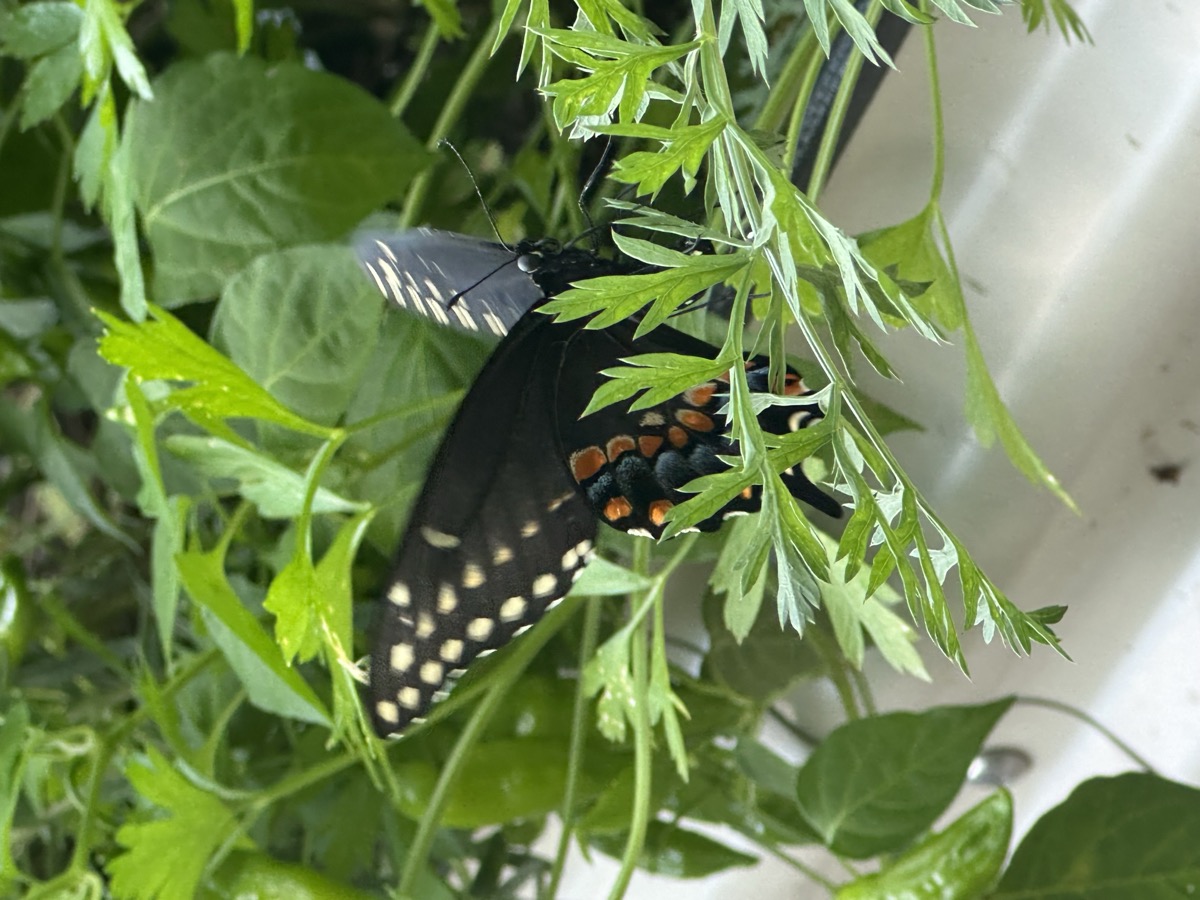
I was relieved that these particular plants seemed to pass inspection.
The more I sat there, the more inspectors I noticed. From what I could tell, none of them had clipboards or name badges, but they were all very detail oriented. (Unlike myself, who was getting absolutely no work done.)
A bumblebee hummed from the cucumbers to the tomatoes to the peppers, examining each flower before deciding which ones were worth a closer look.
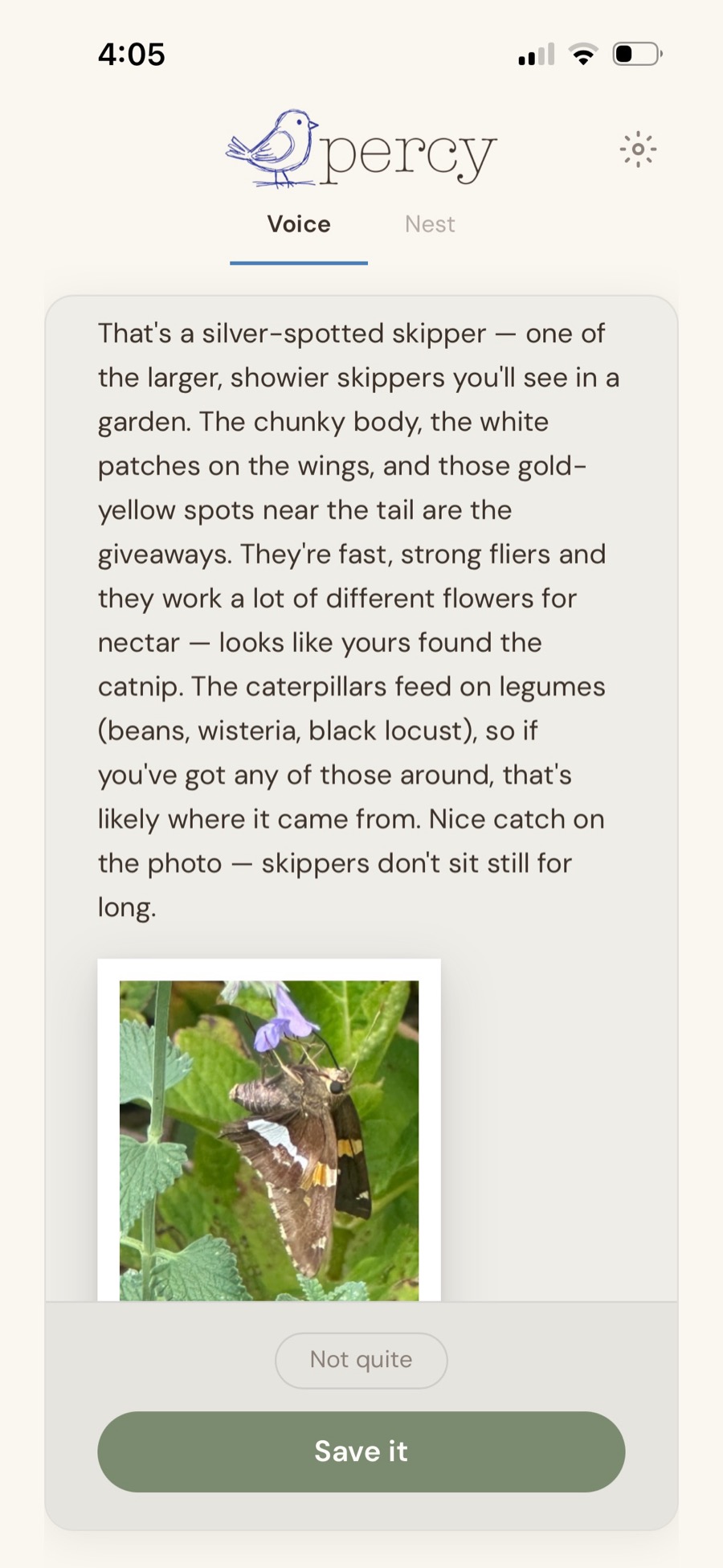
A fast moving butterfly took a special interest in the catmint. Percy told me it was a silver-spotted skipper and congratulated me on getting it to hold still long enough to say cheese.
White cabbage moths checked the kale. Hover flies probed the parsley that had gone to flower.
All these tiny inspectors were out here gardening.
Peeking under leaves, looking for new growth, having a little snack on the spot.
As much as I've preened and obsessed over my garden, I've never noticed just how many others were preening and obsessing right alongside.
There was an entire daily rhythm to the place that was invisible to me. It made me wonder if they ever got distracted from their work when they noticed I was there working too.
Sure, I'd seen bees and butterflies out there while doing other things. I'd just never stopped doing things long enough to watch which plants they paid attention to, or how they circled to make sure no dill plant went unapplauded.
It filled me with a sudden sense of responsibility. These inspectors were here only because of what I planted. In my garden, they found the fuel and habitat they needed to survive.
It's easy to forget that part. Between the weeding and the pruning and the sowing, we forget to stop and just do some looking.
When you notice which corner the bees keep choosing, you start wondering how to give them more of it. Notice what's native to where you live and what's invasively manspreading everywhere, and you start tending a little differently, on purpose.
This is the whole reason Percy exists.
Underneath the remembering and the plant IDs and the advice, Percy is a tool for noticing.
It helps you capture what you saw, so this season can talk to next season. The swallowtail you watched in August is still there in your record when you wonder, come spring, where to plant the dill. And because Percy can tell you what's native or invasive where you live, that noticing turns into care, all without you having to squint at long lists of unpronounceable Latin names (looking at you, Parthenocissus quinquefolia).
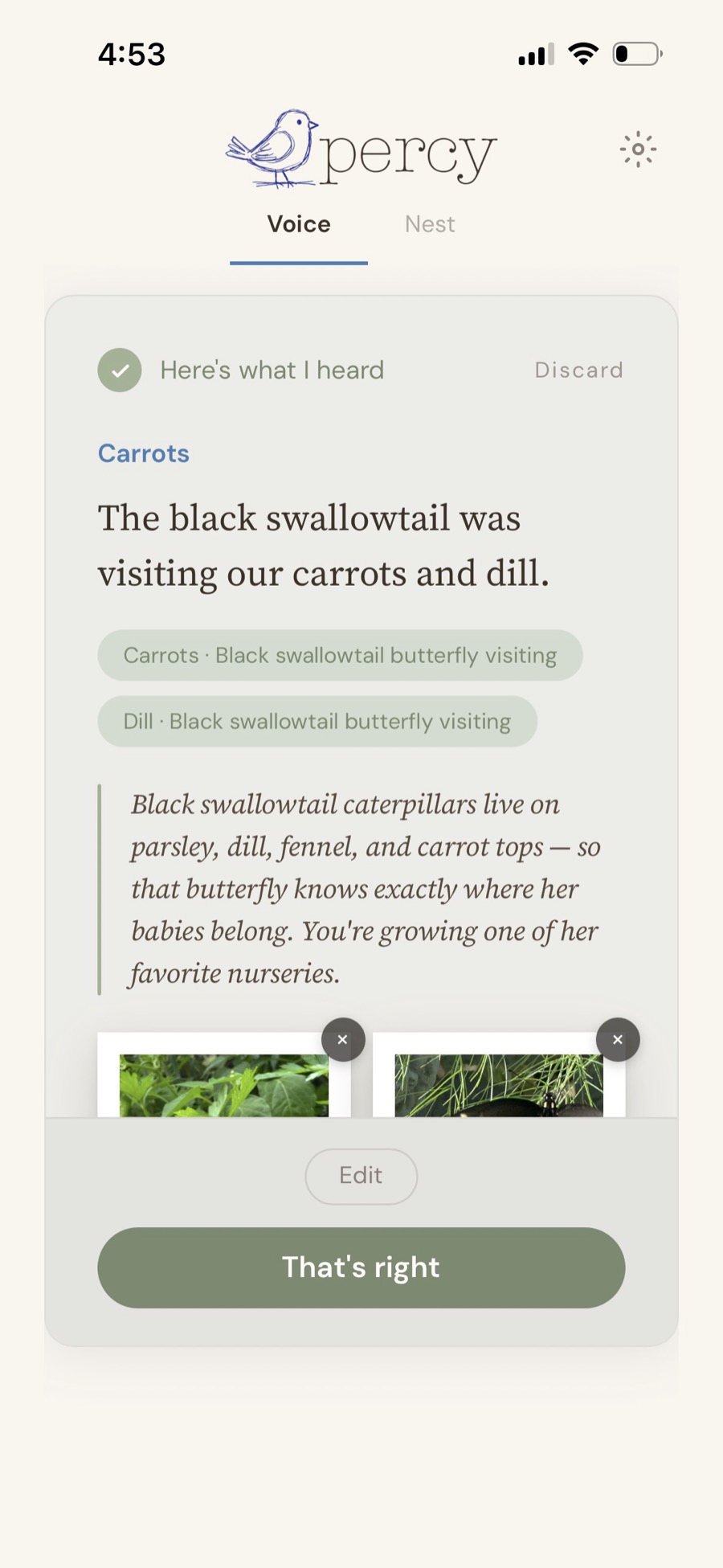
So the next time you spend a day in the garden, don't garden. Just watch.
Follow a bee. See where it takes you.