Birdseed
In the garden
Before You Order Seeds: 5 Questions to Ask About Last Year's Garden
Before you order seeds, look back at last year's garden: what grew, when it happened, what the weather did, what failed and what you meant to change.
There was a time in my life when I had patience.
But over the years that part of me has been slowly ruined by trying to get a child to put on socks, same-day delivery and walking behind tourists who don't know how the sidewalk works.
So when a slightly sunny week arrived in February this year, I made the impulsive decision to start all of my tomato seeds.
It was at least three weeks too early. And then spring stayed too cold to plant them for weeks longer than usual.
I was left with two dozen spindly tomato seedlings, huddled on a shelf under the grow lights in my basement well into May. They looked like the sullen crowd at the DMV, wondering if they'd ever get to see the sun.
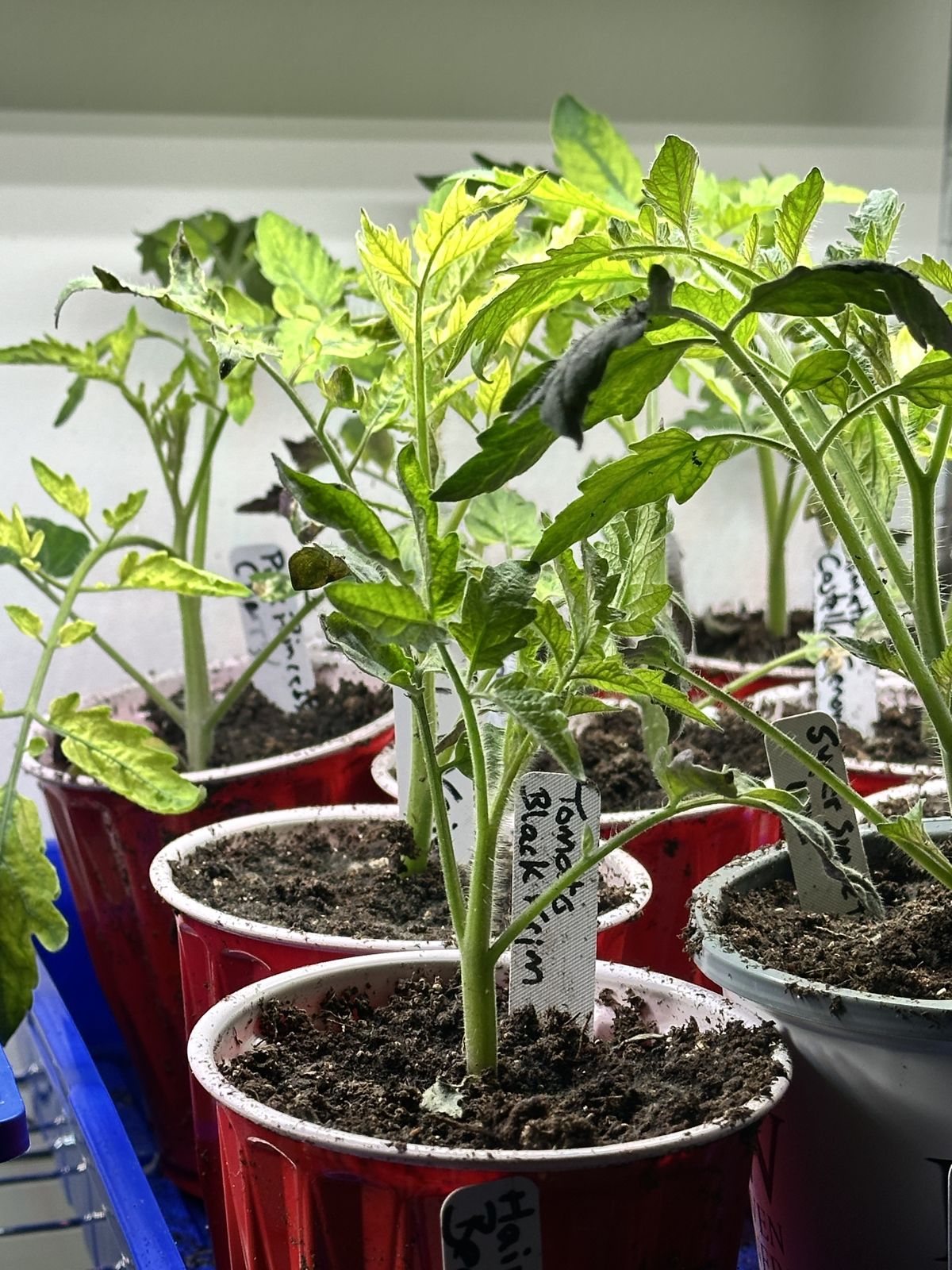
March 21. Potted up, and nowhere to go.
The tomatoes eventually bounced back, but despite my words of encouragement and liberal sprinklings of bone meal, this season's harvest was what Mets fans affectionately call a "rebuilding year."
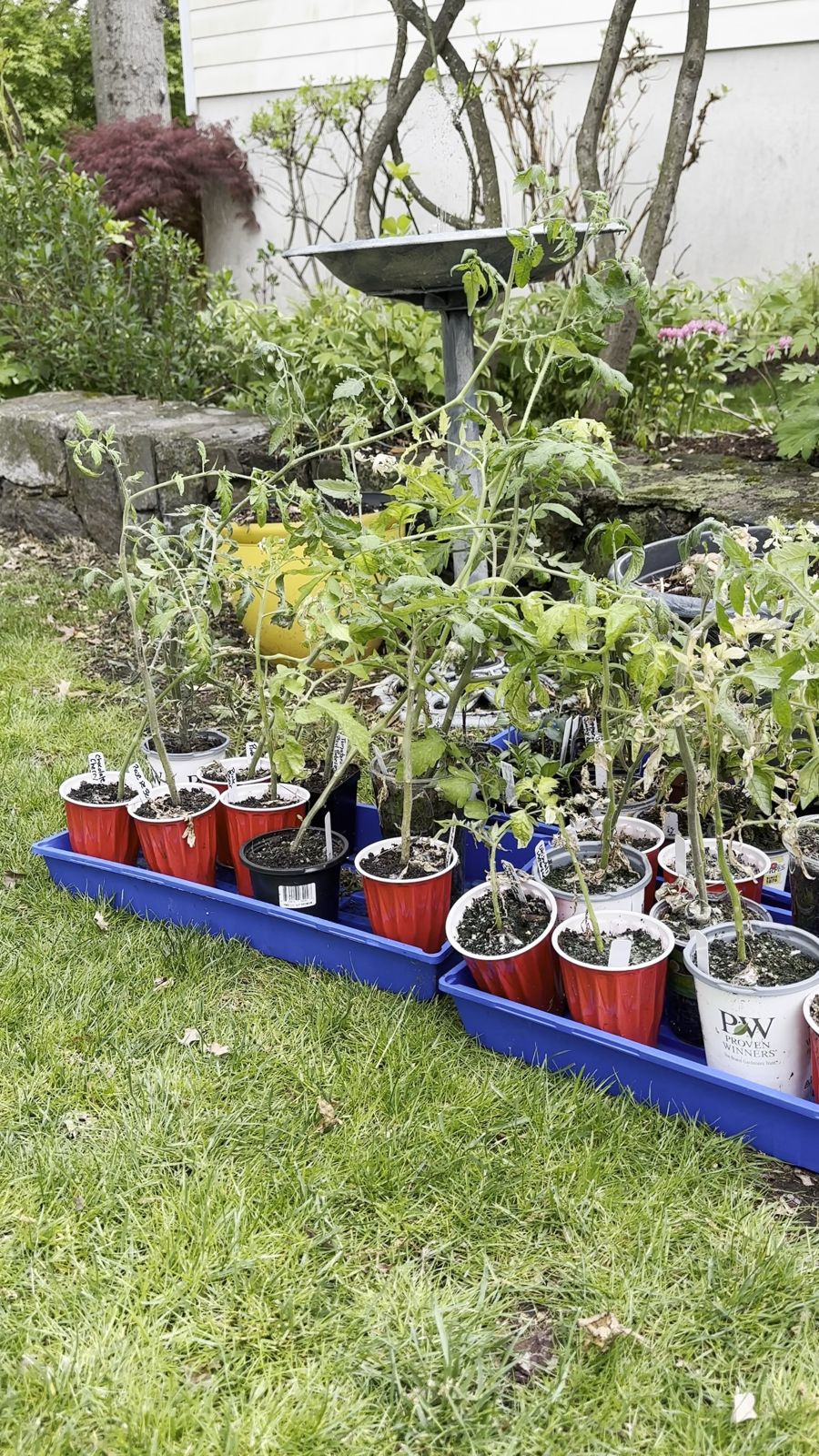
May 2. Finally outside to harden off, two weeks before they went in the ground.
This timing flub is the kind of mistake I want to remember. It's not going to help with the patience thing. But next February, when the seed packets start showing up on the racks and I get a little too excited, it'll help me look back and remember to slow my roll.
Gardening is all a game of trial and error (or in my case trial and error and error and error and…).
And winter is when remembering pays off. When the seed catalogs arrive, they catch you at your most optimistic. The memory of last season has already become a hazy handful of highlights and a vague sense that something should definitely be planted further apart this season, though you're not sure what.
So before you order a single seed this winter, read your season back. Here's how.
Before planning next year's garden, look back at five things: what you grew, when things actually happened, what the weather did, what didn't work and what you promised yourself you'd change. Your notebook, camera roll and local weather history can usually give you the answers.
Five questions to ask last season
You can answer these from a paper notebook, your phone's notes, your camera roll, or Percy. Whatever you've got, the questions are the same.
1. What did you grow, and what would you grow again?
Make two lists: the plants you'd take with you to a desert island, and the ones that grew nothing but disappointment. Be ruthless with the second list. Seed catalog copy will try very hard to talk you back into them. While you're at it, go through the seed packets you already have. Most keep for a few years if they're stored cool and dry.
2. When did things actually happen?
When did you start the seeds? When did they go outside? When did the first harvest come in? This is the question that would have saved my tomatoes. Your memory will give you a feeling. You need a date.
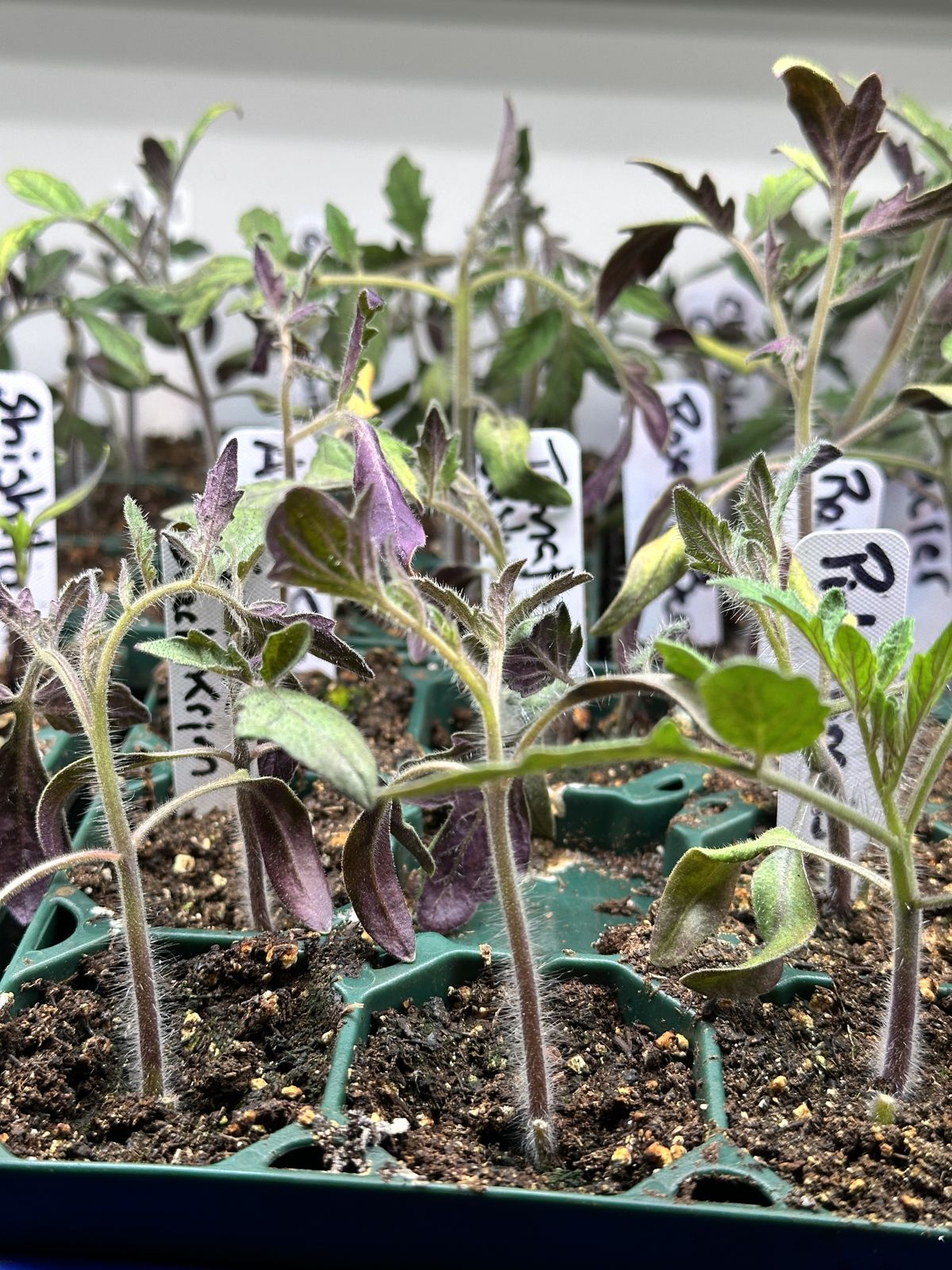
My camera roll says March 14, a week before they were potted up, and that these were already in trouble.
3. What did the weather really do?
It's easy to remember the most dramatic week and forget the late cold snap, the dry stretch in August, the week of heat that cooked the lettuce. Weather explains more of a season than we usually give it credit for. And it's also the part we tend to remember the worst. If you didn't keep track, a nearby weather station's history will tell you.
4. What didn't work, and why?
It's not easy to admit defeat. But this list is one of the most useful ones to have. Maybe it's the variety that looked amazing in the catalog and pathetic in the garden, or the pest you caught a week too late, or the overeager gardener who will now be starting tomatoes in March.
5. What did you promise yourself for next year?
Somewhere in the middle of the season, you said "next year I'm going to…" out loud, probably while staring at something that went wrong. Find those. They're the plan you already wrote.
Where the answers are hiding
Your camera roll. Every photo has a date. Scroll back to spring, and the first seedling photo may get you surprisingly close to your start date. The first tomato photo is close to your first harvest. It's the most complete garden record most people have, and almost nobody scrolls back to read it.
Your notebook, however short. One of mine has exactly four observations in it. Four is four more than nothing. Read them.
Your weather history. A nearby weather station or local climate archive can usually give you daily highs, lows and rainfall. Put your season next to it and the mysteries start explaining themselves.
The real value of a garden journal isn't having a record of last year. It's having last year in hand when you're making decisions about the next one.
What if your garden journal could do the review for you?
Percy is the garden journal that remembers. (Full disclosure: I make it.) It's built so the end-of-season review doesn't depend on you keeping a perfect notebook all summer. All season you talk to it, ten seconds at a time, while your hands are still dirty: "started the tomatoes downstairs." "The tomatoes are looking sad." "Finally planted the tomatoes." It keeps each note by date and by plant, with your photos, that day's weather and an undercurrent of disappointment. You garden; the record keeps itself.
Then, in January, right around when the seed catalogs show up, it hands the whole season back as your Migration Report, in the app and by email. It's a year-in-review of your garden, and it answers the five questions before you have to ask them.
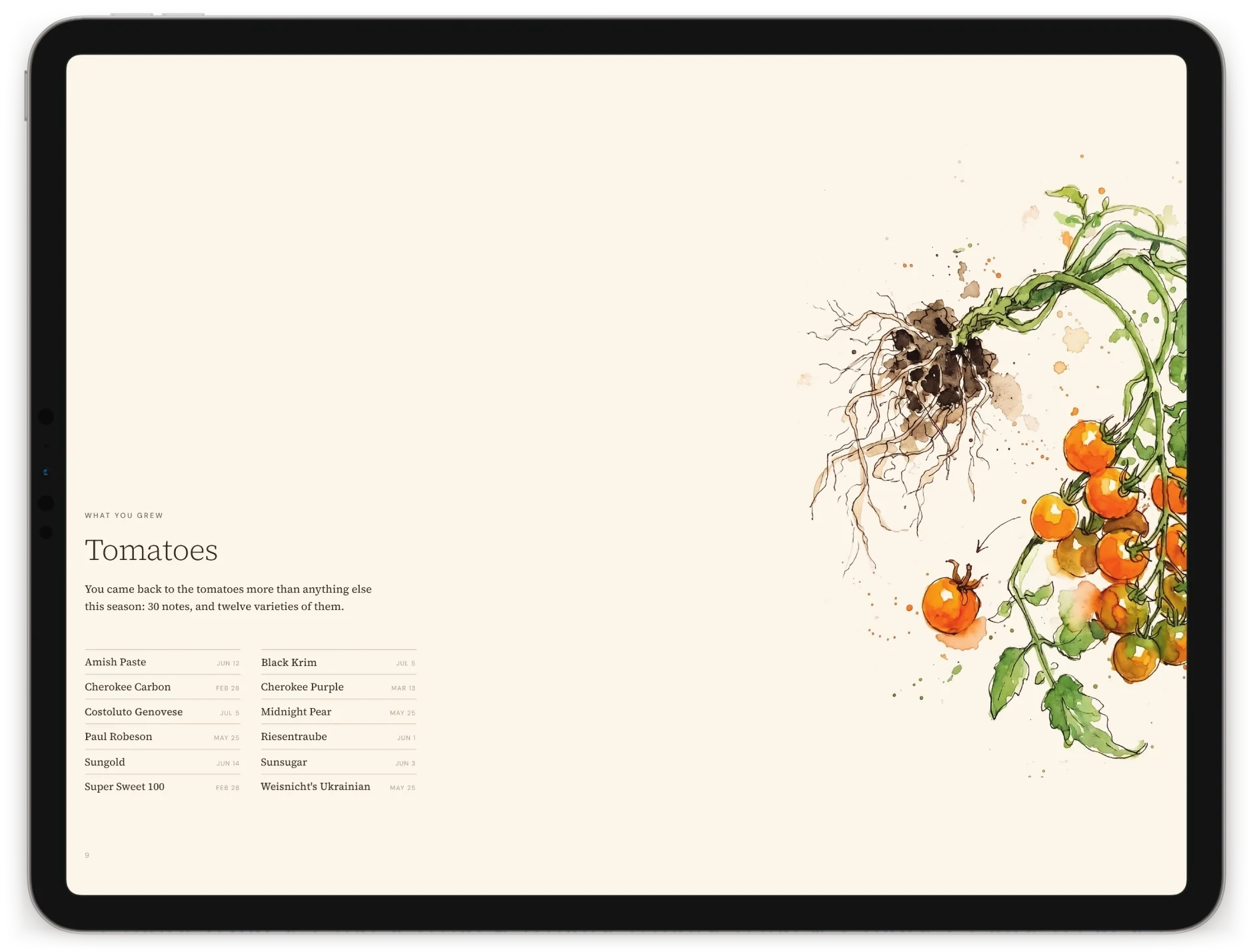
What did you grow? Every plant gets its own chapter, with your photos and your notes from the season.
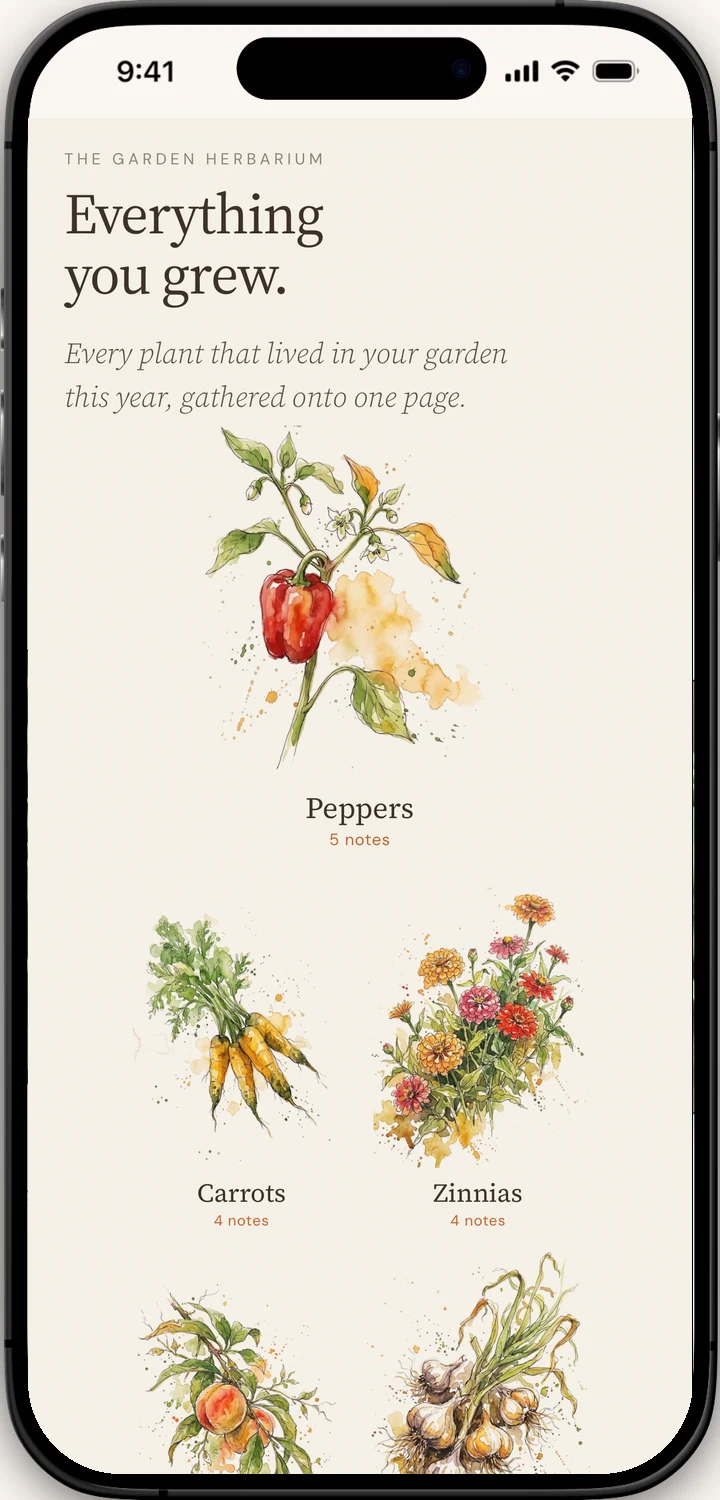
When did things actually happen? Every day you stopped to look at a plant is in its chapter, dated. "When did the tomatoes actually go out?" finally has an answer. If I'd been keeping one that February, my tomato chapter would have said it plainly: started the second half of February, planted out May 17. Three weeks too early, in black and white.
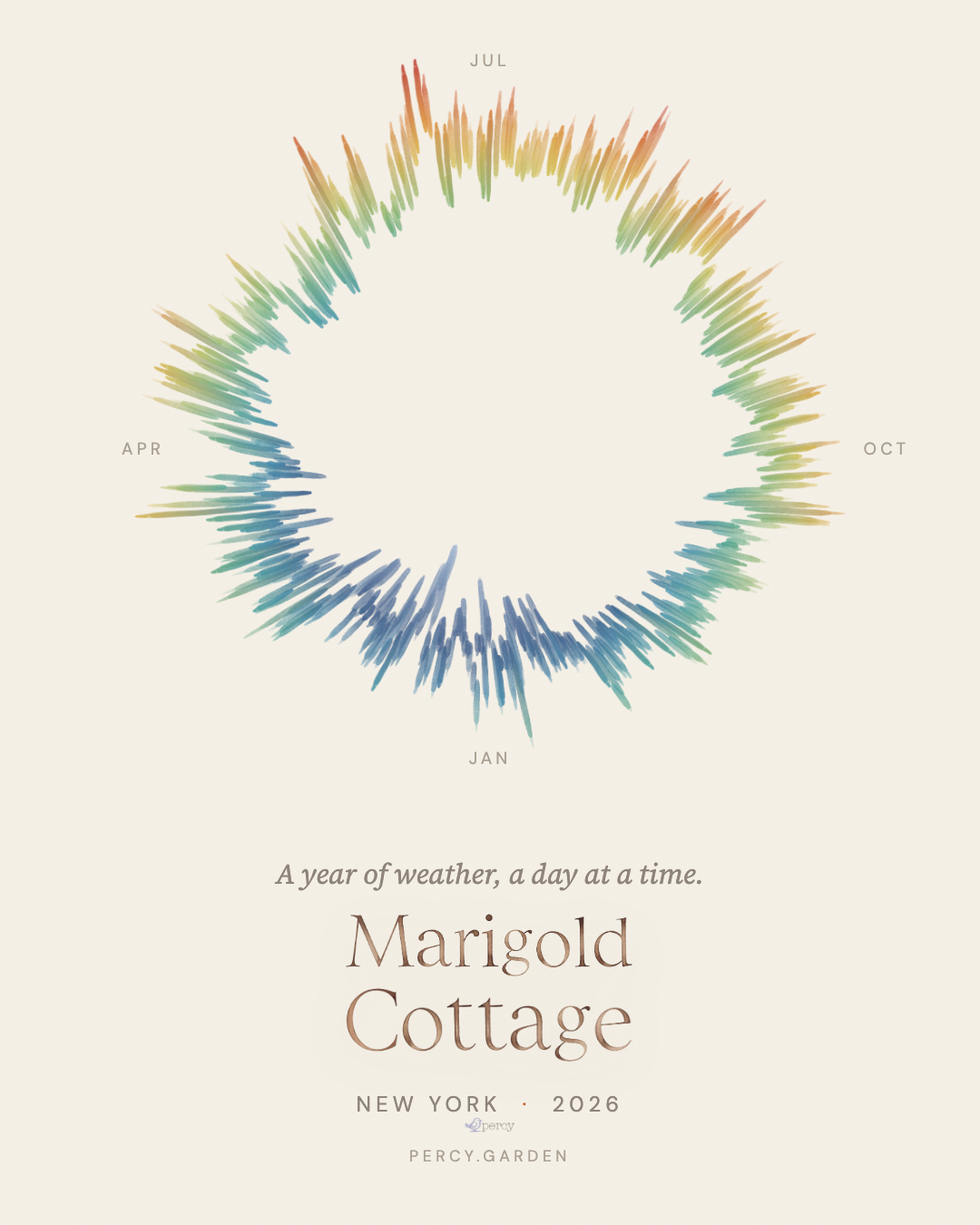
What did the weather really do? A year of weather in one ring, every day's high and low. Tap a day to see its week. In my report for this year, that cold May will be hard to miss.
What didn't work? It's there in your own words, in each plant's chapter, next to the weather that week. The highlights are there too: your best photos and moments of the season.
What did you promise yourself for next year? Notes for next season gathers every "next year I'm going to…" you told Percy into one place.
And one you didn't think to ask: the garden's visitors. The wildlife you noticed, in your own words, with the day you saw it.
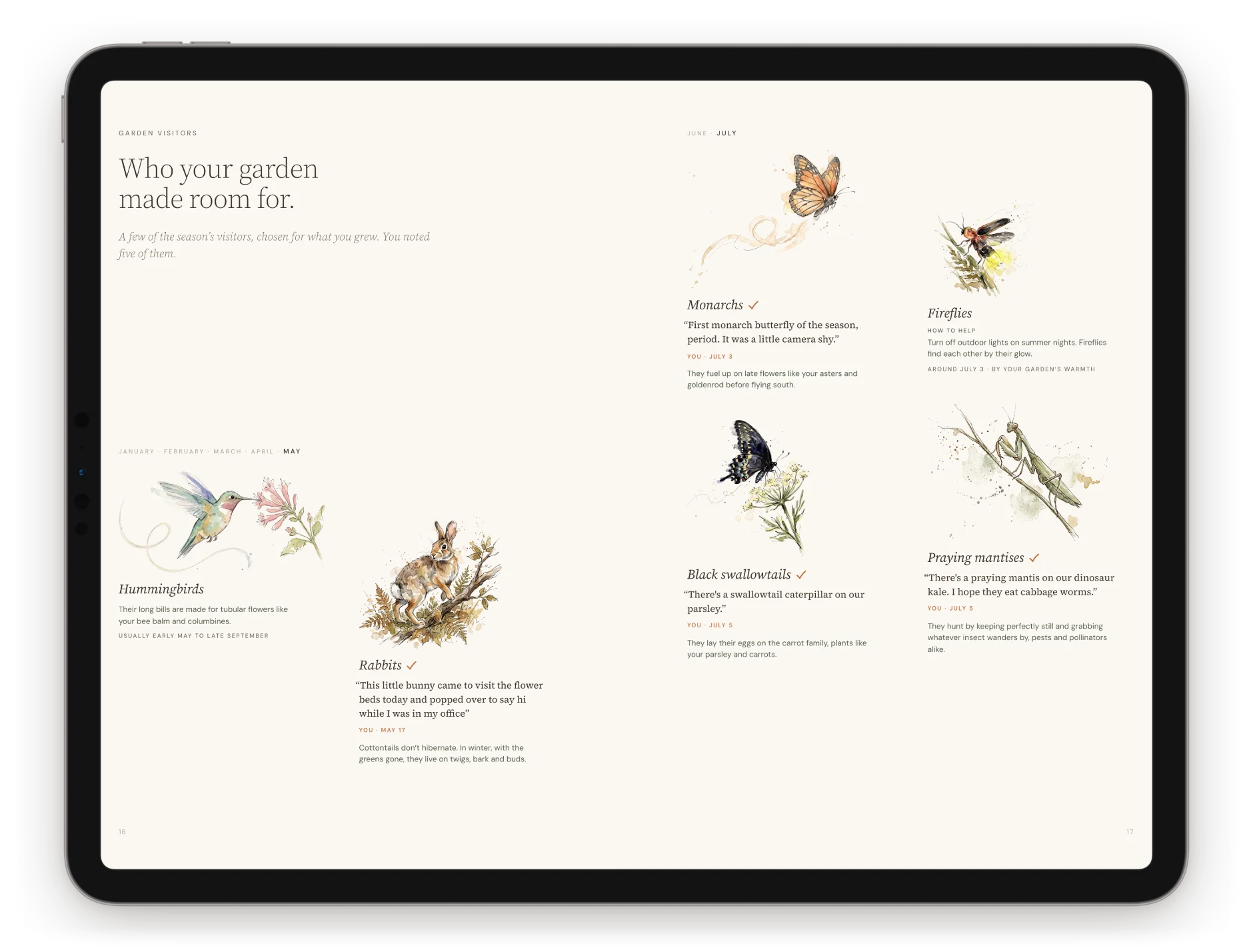
Every report also comes with a digital edition: the story of your season, then your complete journal, every note in your own words with your photos. Download it, keep it, and open it some January when you're deciding where the tomatoes go.

You can go through mine. It's my garden in New York. The weather in it is New York City's from 2025 for now, a stand-in until this season closes.
Next spring
From your second season, Percy can remind you what you were doing this time last year.
So next February, when a slightly sunny week shows up and I reach for the tomato seeds, something can remind me what happened last time.
Not because I've finally learned patience. Because apparently I need evidence.
Percy is free for your first full growing season. But you don't need Percy to do this. Open your notebook, your camera roll or your weather history, and ask the five questions.
Before you plan the next garden, read the last one back.
Frequently asked questions
How do I review last year's garden before planning the next one?
Ask five questions: what you grew and would grow again, when things actually happened, what the weather did, what didn't work and what you promised yourself you'd change. Your camera roll, your notebook and a nearby weather station's history usually hold the answers.
How early should I start tomato seeds indoors?
Most guides say six to eight weeks before your area's average last frost date. Start much earlier and you get what I got: tall, leggy seedlings waiting under the lights for the weather to turn.
How can I remember when I planted something last year?
Check the dates on your photos first; the first seedling picture usually gets you close. Going forward, write down the date when you start seeds and when they go outside, in a notebook or a garden journal app.
What is a garden year-in-review?
A look back at a whole growing season: what you grew, when things happened, what the weather did and what you want to change. Percy's version is the Migration Report, which arrives each January in the app and by email.
Percy is the garden journal that remembers, so you can enjoy your garden. Your first full growing season is free, and it ends with your Migration Report: your garden’s year in review.



Member of 1% for the Planet. Percy pledges 1% of annual sales to environmental nonprofits.
Member of 1% for the Planet. Percy pledges 1% of annual sales to environmental nonprofits.

Enjoy your garden. Percy remembers it.
Free for your first growing season. Then $39/year as a Founding Member, locked in for as long as you stay subscribed. The price will rise as Percy grows. Yours won't. No credit card to start. Your data is yours regardless.