Plant ID Is Only the Beginning
Brian Eden
Identifying a plant tells you its name. Understanding whether it belongs, what to do about it, and remembering what happened next is where gardening gets interesting.
There's a four-foot-tall tree stump along the fence line in the back corner of my yard. For a few years it just sat there being a stump. Doing stump things. Enjoying stump hobbies.
Then some ivy found it. Deep green. Glossy. Those classic pointed leaves. A dignified kind of plant that looks like it just graduated from Harvard and climbed like it was trying to hang a diploma. I didn't plant the ivy there, but I didn't stop it either. As it grew, I tucked stray vines back toward the stump to encourage it. Within a couple of seasons the stump disappeared under a tidy green dome, and I was pretty proud of it. It was the closest I'll ever get to Harvard. It looked intentional. It looked like I knew what I was doing.
I did not know what I was doing.
A name isn't an answer
If you asked me what this ivy was called, I would have said English ivy, because that's the only ivy name I know. I probably used a plant ID app to confirm it, and then felt a bit smug for being correct.
What I didn't know, as I was lovingly tucking in another tendril, was that across much of the United States, English ivy is considered invasive.
It spreads along the ground and smothers whatever's underneath. Given a tree, it climbs, and once it's up high it matures, flowers, and makes berries. Birds eat the berries and plant ivy somewhere else, very generously, for free. My decorative little stump wasn't a garden feature. It was a distribution center.
This is what a name can't tell you on its own. I had the right answer to "what is this?" but I had no idea that was the wrong question.
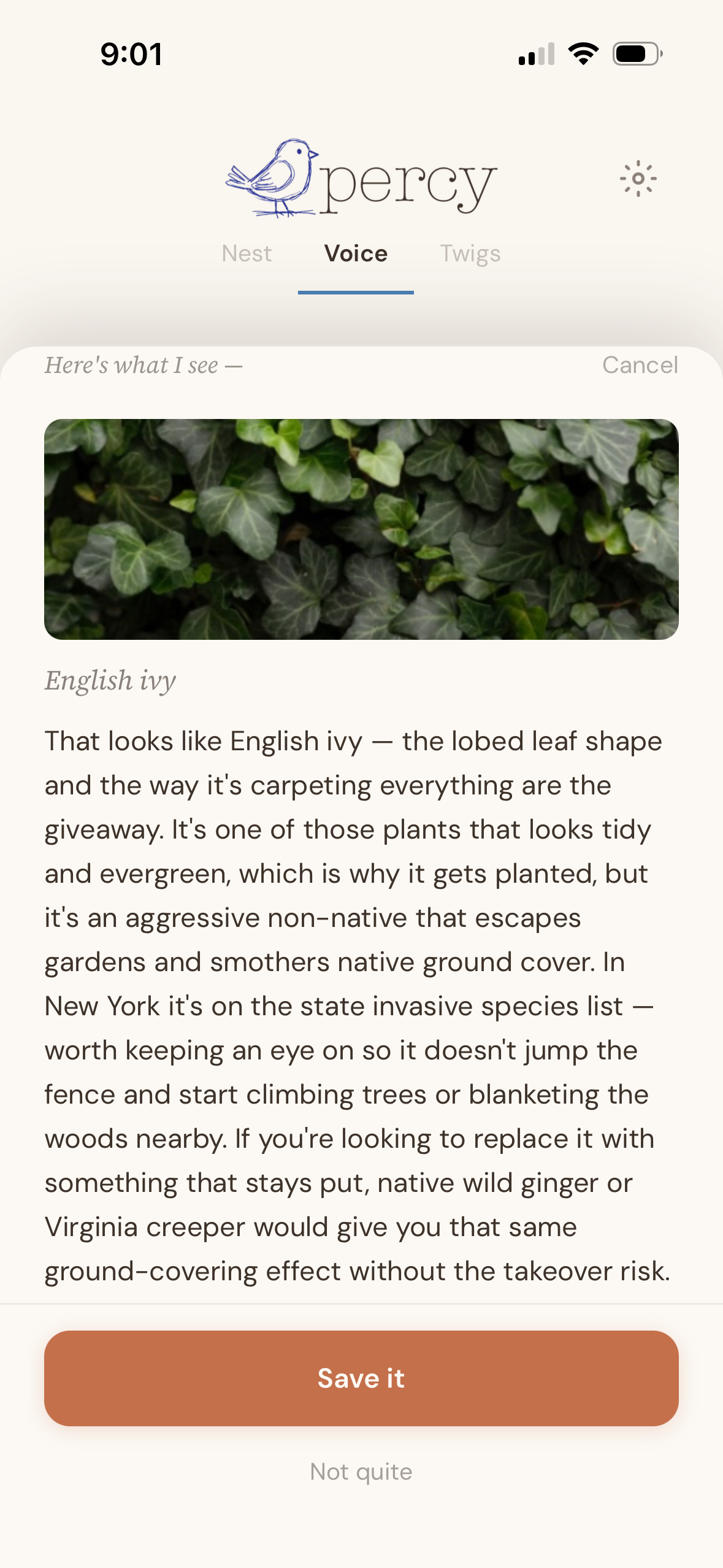
The same plant. A different place.
Here's the part that makes this tricky. English ivy isn't a villain everywhere. In the UK and much of Europe, where it's native, it's valued as a late-season food source for insects and a winter shelter for birds. People there plant it on purpose, for wildlife.
Same leaves. Same vines. Same berries as the ones growing on my stump. The only thing that changes is the ground under it. So when someone online calls English ivy "great for wildlife," they may be completely right, just about a different continent.
A plant ID with no sense of place can hand you a perfectly accurate name and care instructions and still steer you wrong.
Whether a plant belongs in your garden depends on where your garden is. It also depends on what the plant is likely to do next, and on whether you'll still be there when it does.
Knowing what to do next
Once I knew, I did what I now do with most garden problems, which is ask Percy before I make them worse. It told me how to get the ivy off without just giving it a haircut.
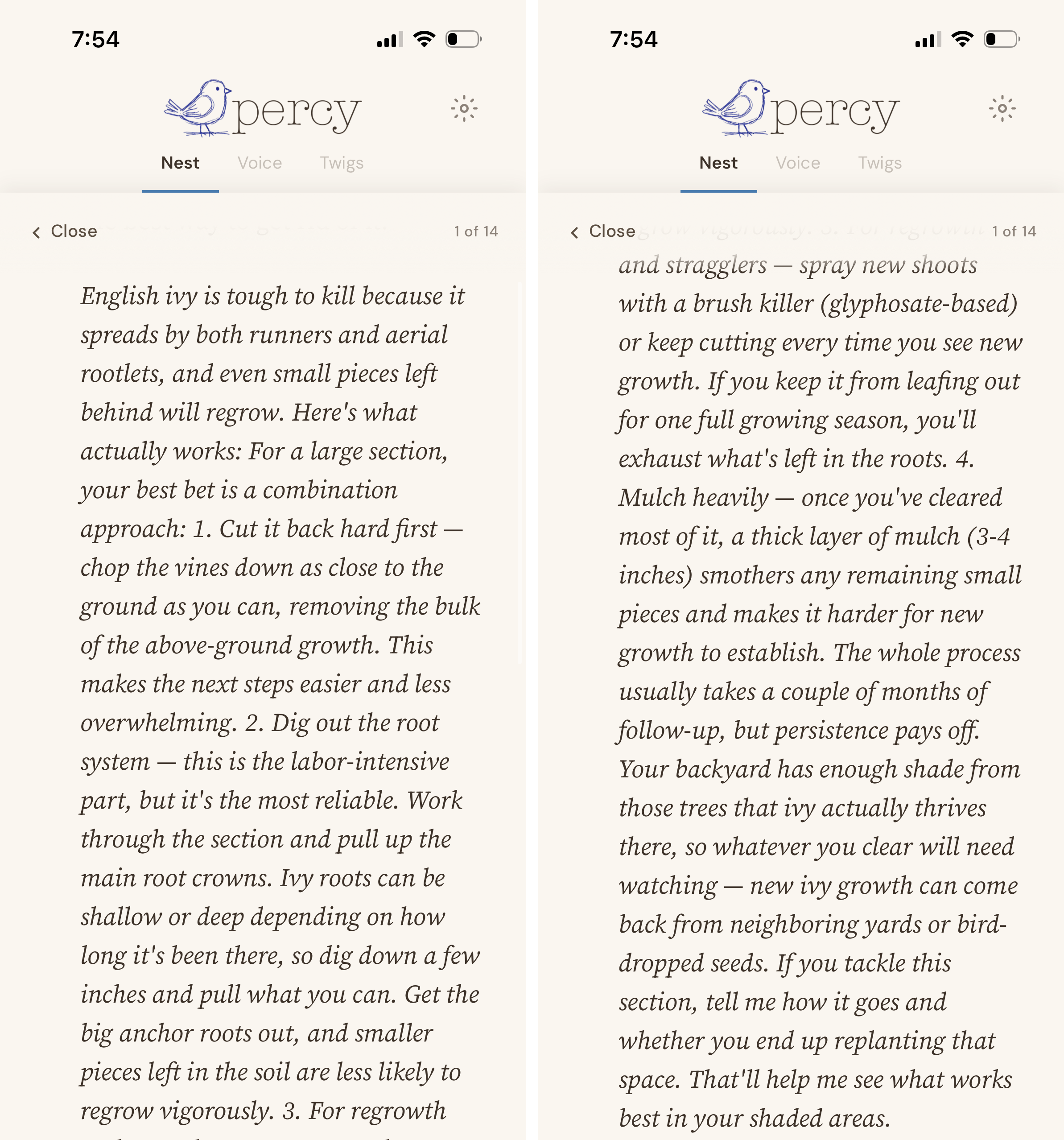
Removing ivy from a stump turns out to be less like weeding and more like arguing with a carpet. It holds on. It is stubborn and unruly in a way you would not expect from a college grad. The vines on the ground run farther than you'd guess, and every time you think you've found the end, it keeps going.
When I finished, I told Percy what I'd done, the way you'd tell a friend who'd been quietly hoping you'd get around to it. Percy was, frankly, more gracious about it than I deserved.
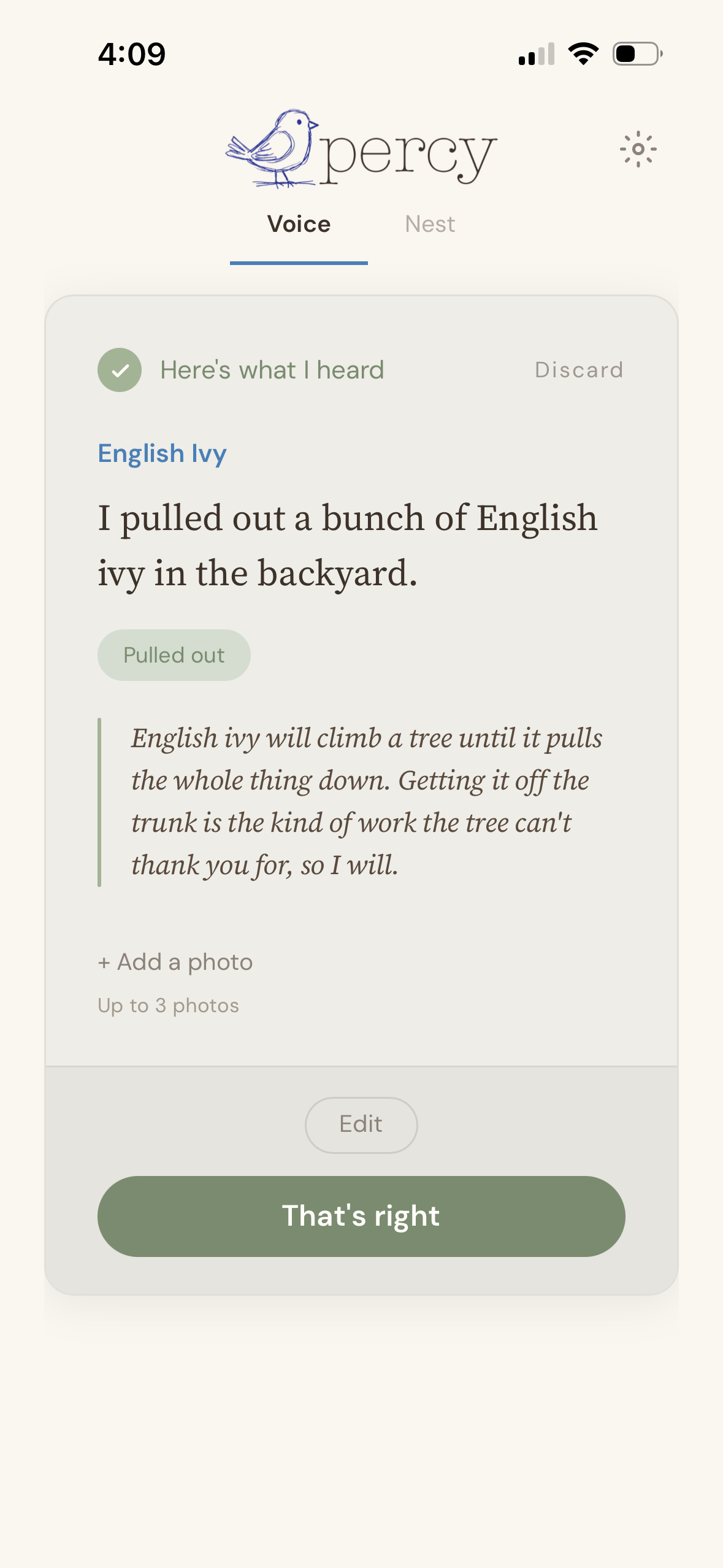
I'll take it. It's not every day a garden journal congratulates you for undoing your own work.
Remembering what happened
Ivy doesn't leave quietly. Little bits of root stay in the soil, and some of them will try again next spring. That's where Percy earns its keep. It isn't the one-time identification. It's the fact that the ivy is now part of my garden's record: when it went on the stump, when it came off, and what I learned in between.
So when a few suspiciously glossy leaves show up by the stump next April, I won't be starting from scratch. I won't wonder whether it's something new or whether it's worth keeping. Percy and I have met this plant before, and we already know how that went.
That's the difference between identifying a plant and knowing one. One is a name. The other is a name in a particular place, over time, with a history you were there for, including the parts you'd rather not repeat.
The stump is bare again. It looks a little embarrassed. Frankly, so do I.
But now I know what was growing there, why it mattered, what I did about it, and what to watch for next.
That's what plant identification should make possible.
And I'm guessing there's a plant in your yard you've been meaning to ask about. That's a fine place to start, too.
Frequently asked questions
What's the best plant identification app? The right plant identification app depends on what you need after the identification. Apps such as PictureThis and LeafSnap focus on identifying plants and providing plant information and care guidance. Percy combines plant ID with location-aware native and invasive context, personalized gardening advice, and a searchable record of your garden over time. If you want to compare the main ones side by side, I put them next to each other in the best gardening apps of 2027.
Can an app tell whether a plant is native or invasive? Some can, and it's the part worth paying attention to, because the answer depends on where you garden. A plant can be a treasured native in one region and a regulated invader in another. Percy flags widely recognized invasives and only calls a plant native when it's confident that's true, staying quiet rather than guessing when it isn't sure.
How accurate is plant identification from a photo? Good for common garden plants, less certain for tricky look-alikes and specific varieties. Treat the first answer as a strong guess, not gospel. A clear photo of leaves, flowers, and overall shape helps, and it's always worth a second look before you make a decision you can't undo (like pulling something out, or letting it spread).
What should I do after I identify a plant? Write it down somewhere that will still know about it later: what it is, where it's growing, and the date. The name is only useful when it connects to your actual garden over time: whether you planted it, how it did, whether it's welcome. An ID you record is knowledge; an ID you look up and forget is just a fact you'll re-learn next season.
Does Percy identify plants? Yes. It identifies what you show it and then keeps it: filed under that plant's chapter in your garden's record, with your photo and the date, alongside everything else you've grown, so the answer is still there the next time you need it.
Is English ivy invasive? In much of the United States, yes. English ivy spreads across the ground, climbs trees, and once mature produces berries that birds carry to new places. Several states list it as invasive or restrict its sale. In the UK and much of Europe, where it's native, it's a valuable plant for wildlife. Whether it belongs in your garden depends on where your garden is, so check your state or local invasive species list before you decide.
A note from Percy
Percy is the gardening app that remembers your garden. It's a garden journal, garden planner, and personalized gardening assistant with plant identification built in.
When you identify a plant, Percy can help explain whether it's native or invasive where you live, what that means for your garden, and what to do next. It also remembers the identification, the advice, and what you actually did, so you're not starting from scratch the next time you encounter it.
Free for your first season. No credit card.